Strengthening accountability systems and protecting vulnerable displaced populations is a major milestone for humanitarian actors working in crisis zones. For many local non governmental organisations and grassroots teams, securing the dedicated resources needed to design culturally appropriate safety campaigns remains a persistent struggle. Navigating the competitive space of humanitarian protection grants can be incredibly tough without a structured, supportive partner that values local leadership and provides flexible funding for targeted community outreach.

Join our Telegram Channel for Instant Scholarship Updates
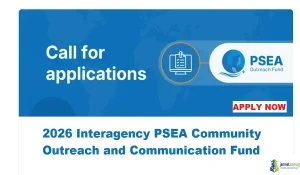
The 2026 Inter-Agency PSEA Community Outreach and Communication Fund, jointly launched by UNHCR and ICVA, is a premier global safeguarding initiative designed to solve these operational challenges. By providing specialized grants for community led awareness projects, this fund ensures that passionate national civil society organisations can focus entirely on preventing sexual exploitation and abuse, developing open source materials, and amplifying survivor voices without financial or administrative worry.
PSEA Community Outreach Fund Summary Table
| Detail | Value |
|---|---|
| Host Organizations | UNHCR and ICVA |
| Target Audience | Local and National NGOs, Civil Society Organisations |
| Primary Benefit | Project Funding and Global Safeguarding Capacity Support |
| Program Type | Global Grassroots Communication and Protection Grants |
| Location Focus | Open to Humanitarian Settings Globally |
| Application Deadline | June 14 2026 at 23:59 CET |
About the Initiative 2026
The PSEA Community Outreach and Communication Fund represents far more than a basic financial grant; it serves as a prestigious launchpad for grassroots safeguarding funds and locally led crisis response. Originally established in 2020 as a collaborative effort between the United Nations High Commissioner for Refugees and the International Council of Voluntary Agencies, the fund has successfully financed over sixty five grassroots projects worldwide, reaching more than two million people in sixty local languages. This competitive program is designed to empower local actors who are best positioned to understand community realities, communicate in regional dialects, and design protective interventions that genuinely resonate with displaced and conflict affected populations.
Core Objectives of the Program
- To support grassroots organisations by offering high value humanitarian protection grants and capacity strengthening resources.
- To advance global accountability by ensuring that people receiving aid understand their rights and have access to safe reporting channels.
- To foster local ownership of protection systems in line with the Grand Bargain and the Global Compact on Refugees.
Core Priority Areas for Funding
The fund supports innovative, locally driven projects focused on the following three operational pillars:
- Community Led Protection: Projects that actively involve affected populations in the design, leadership, and execution of local protection strategies.
- Locally Tailored Communication: Developing educational tools (such as radio spots, posters, community theatre, videos, and illustrations) adapted to local languages, literacy levels, and cultural realities.
- Systems and Leadership Strengthening: Upgrading internal organizational safeguarding policies, training local staff, and building robust referral pathways for survivors.
Benefits of the 2026 PSEA Outreach Fund
- Direct, flexible financial support to implement tailored protection and communication projects.
- Outstanding opportunities to strengthen your internal organizational capacity in PSEA and safeguarding.
- Direct contribution to a massive global open source database of adaptable, multilingual protection materials.
- Enhanced international visibility and credibility within prestigious UN and international NGO networks.
- Valuable access to global technical publications, guidance documents, and expert advisory resources.
- Potential pathways for long term partnerships with major international development and donor agencies.
Eligibility and Requirements for Applicants
- Legal Entity Status: Open to registered local and national non governmental organisations, civil society organisations, and community led groups.
- Operational Setting: Projects must be implemented within active humanitarian settings, targeting refugees, displaced families, or returnees.
- Community Expertise: Applicants must demonstrate a strong, proven track record of local community engagement and trust.
- Language Capability: Proven capacity to develop materials and conduct outreach in local languages and dialects.
- Safeguarding Alignment: Deep commitment to the fundamental principles of survivor centered care and zero tolerance for exploitation.
- Direct Execution: Applying groups must lead the implementation directly; sub contracting the core project activities is not permitted.
Step by Step Application Guide for the PSEA Fund
Phase 1: Local Assessment and Partnership Alignment
- Visit the official UNHCR or ICVA portal to study the 2026 call for proposals guidelines.
- Assess the specific communication gaps and safety challenges facing vulnerable groups in your area.
- Engage directly with local community leaders, women groups, and youth to co design your project concept.
- Confirm that your target location is an active, recognized humanitarian or post crisis setting.
Phase 2: Compiling Your Institutional Portfolio
- Gather your official non governmental organisation registration papers to prove your legal status.
- Update your organizational profile to highlight your past protection, human rights, or community outreach achievements.
- Document your current safeguarding guidelines, staff codes of conduct, and reporting systems.
- Save all these administrative and capability records as separate, high quality PDF files.
Phase 3: Drafting Your Technical and Communication Proposal
- Write a detailed project proposal explaining your technical methodology, timeline, and budget.
- Clearly detail how you will adapt your communication materials (such as radio, posters, or theatre) to local cultures and literacy levels.
- Define your expected outcomes, tracking indicators, and sustainability plans for the community led systems.
- Proofread your written text carefully to ensure the English is simple, clear, and completely hyphen free.
Phase 4: Submitting Through the Official Channel
- Access the official PSEA Community Outreach and Communication Fund application portal.
- Complete the online registration forms with your correct contact, geographical, and institutional details.
- Upload your completed technical proposal, detailed budget spreadsheet, and organizational credentials in standard PDF format.
- Submit your completed application package before the absolute deadline of June 14 2026 at 23:59 CET.
Phase 5: Result Tracking and Capacity Readiness
- Save a digital confirmation of your submitted application and all uploaded files for your records.
- Monitor your professional email account regularly for any screening feedback or requests for clarification.
- Review existing materials in the global open source database to find tools that can be adapted for your project.
- Ready your field team to begin your training, community dialogues, and production phases immediately upon selection.
Jamnet Expert Advice (STAR/SMART Methods)
- Use the SMART Method: Be Specific about the local languages you will translate materials into, ensure your community reach is Measurable, and keep your goals Relevant to preventing exploitation.
- Apply the STAR Technique: In your proposal and future interviews, describe a challenging protection Situation in your operational setting, the specific Task you managed, the Action your team executed using community resources, and the positive, safe Result.
- Emphasis: Focus heavily on demonstrating how your project puts the community at the center of the solution and ensures safe, anonymous reporting channels for all.
- Proactive Tip: Submit your application early in the cycle, as late submissions are strictly not considered, and early files receive comprehensive reviews by the joint selection panel.
Deadline: June 14 2026 at 23:59 CET
Frequently Asked Questions (FAQ) About the PSEA Fund
- Who administers the PSEA Outreach Fund? The fund is officially administered as a joint collaborative initiative between UNHCR and ICVA.
- Who is eligible to apply for these grants? Registered local and national NGOs, civil society organisations, and community led grassroots groups.
- What is the application deadline? All online submissions must be completed on or before June 14 2026 at exactly 23:59 CET.
- In what languages can I access the application materials? Guidance materials and application templates are available in English, French, and Arabic.
- Can we submit videos or creative materials as part of our proposal? Yes detailing your plans to produce localized, creative media (such as radio, comics, or videos) is highly encouraged.
- What happens to the materials we produce? All outreach materials created through the funded projects are added to a public database for global adaptation and reuse.
- Are international NGOs eligible to apply? The program is specifically designed to support and strengthen local and national civil society organizations.
- Does the fund cover administrative overheads? Yes reasonable, direct project expenses and operational costs are covered within the grant guidelines.
- When was the fund first established? The Inter-Agency PSEA Community Outreach and Communication Fund was officially launched in 2020.
- How does this program support the localisation agenda? By placing national NGOs at the center of the design, communication, and leadership of community safety systems.