The African International Conference 2026 will be held in person at the University of Bradford from June 11–12, 2026. Focusing on the theme “African Renaissance,” the conference invites abstracts (max 250 words) on sustainable development, due by January 30, 2026. It features oral, poster presentations, and networking events for scholars and policymakers.
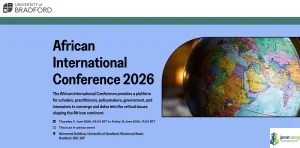
African International Conference 2026 Summary Table
| Detail | Value |
|---|---|
| Host Institution | University of Bradford |
| Location | Richmond Building, University of Bradford, UK |
| Event Type | Multidisciplinary Academic Conference (In-Person) |
| Core Theme | African Renaissance: Reclaiming Narratives and Advancing a Shared Future |
| Submission Deadline | January 30, 2026 |
| Conference Dates | June 11–12, 2026 |
| Target Audience | Scholars, Practitioners, Policymakers, Government Representatives |
The African International Conference 2026: African Renaissance
The African International Conference 2026, hosted at the University of Bradford, serves as a crucial multidisciplinary platform dedicated to addressing the most pressing issues shaping the African continent. Scheduled to take place in person from June 11–12, 2026, the conference aims to foster dialogue, advance knowledge, and promote collaborative research that supports sustainable and inclusive development across Africa.

Join our Telegram Channel for Instant Scholarship Updates
Rooted in the guiding theme, African Renaissance: Reclaiming Narratives and Advancing a Shared Future, the event seeks to reshape global perceptions of Africa by amplifying African expertise, innovation, and agency. Participants will engage in discussions that explore transformative solutions to strengthen governance, improve human development outcomes, and advance regional cohesion, focusing on the continent’s progress in key sectors like technology, renewable energy, and healthcare.
Benefits and Specific Awards of Participating (Conference Value)
Participation in the African International Conference 2026 offers significant professional and scholarly value, extending beyond standard presentation opportunities.
Tier 1: Professional Exposure and Dialogue Platform
- Global Visibility: Successful abstracts are featured in the official conference programme, providing global recognition for research findings.
- Multidisciplinary Engagement: Direct in-person engagement with a diverse audience of scholars, practitioners, policymakers, and government representatives to ensure research has real-world relevance.
- Structured Presentation: Opportunities for comprehensive engagement with research findings through both Oral Presentations (structured talks with Q&A) and interactive Poster Presentations (A1 size with 5-minute overview).
Tier 2: Networking and Collaborative Opportunities
- Strategic Partnerships: Access to networking events aligned with the core themes, facilitating connections with key supporting partners such as the International Peace Research Association and The John and Elnora Ferguson Centre for African Studies.
- Knowledge Exchange: Participation in a variety of academic activities including a pre-conference workshop, plenary and parallel sessions led by invited guest speakers, and high-level panel discussions/roundtable debates.
Tier 3: Thematic Alignment and Impact
- Theme Integration: Opportunity to situate work within the overarching African Renaissance theme, contributing directly to the intellectual, cultural, economic, and political revitalization narrative driven by Africans.
- Interdisciplinary Focus: Platform to explore transformative solutions across seven key sub-themes, including Climate Action and Environmental Sustainability and Epistemic Pluralism and African Indigenous Knowledge Systems.
Eligibility Requirements for Abstract Submission
The conference invites contributions from a broad range of stakeholders committed to African development, including researchers, academics, practitioners, and government officials.
- Affiliation: Submissions are open to individuals with an institutional affiliation (academic, policy, or practice) related to the conference themes.
- Abstract Length: The submitted abstract must not exceed 250 words.
- Clarity and Accessibility: The abstract must demonstrate that the research can be understood by non-specialist audiences and must clearly address the conference theme.
- Content Requirements: The abstract must explicitly address the following five elements: Background, Research Question or Objectives, Research Narrative (methodology, work undertaken, next steps), Thematic Connection and Impact.
How to Apply for the Conference (Call for Abstracts) (Step by Step)
Prospective contributors must follow a strict timeline and submission guidelines to ensure their abstracts are considered for the conference programme.
- Identify Sub-Theme: Determine which of the seven sub-themes (e.g., Education, Technology and the Digital Future of Learning; Health, Medicine, Food and Human Security) best aligns with your research.
- Draft Abstract: Write an abstract that does not exceed 250 words. Ensure it clearly addresses the societal issue, research objectives, methodology overview, and direct thematic connection/potential impact.
- Finalize Submission Details: Include the author’s full name, institutional affiliation, abstract title, and a list of up to five keywords.
- Submit by Deadline: Submit the complete abstract before the deadline. Late submissions will not be considered.
Abstract Submission Deadline: 30 January 2026
CLICK HERE TO SUBMIT ABSTRACTS
For more Information Click HERE
Frequently Asked Questions (FAQ)
1. What is the central theme of the African International Conference 2026?
The central theme is African Renaissance: Reclaiming Narratives and Advancing a Shared Future, emphasizing African expertise, innovation, and agency in sustainable development.
2. When and where will the conference take place?
The conference will be held in person from June 11–12, 2026, at the Richmond Building, University of Bradford, UK.
3. What is the deadline for submitting an abstract for the conference?
The deadline for abstract submission is January 30, 2026.
4. What is the maximum word count for an abstract submission?
Abstracts must be concise and must not exceed 250 words.
5. What are the two available presentation formats at the conference?
The two formats are Oral Presentations (structured talks with Q&A) and Poster Presentations (A1-sized posters with a 5-minute overview and Q&A).
6. Who is the target audience for this conference?
The target audience is multidisciplinary, including scholars, practitioners, policymakers, innovators, and government representatives interested in African development.
7. What is required to be included in the abstract submission besides the main text?
Submissions must include the author’s full name, institutional affiliation, abstract title, and up to five keywords.
8. What is the expectation regarding the accessibility of the research presented?
Presenters must demonstrate that their research narrative can be understood by non-specialist audiences.
9. Which organizations are key partners supporting the conference?
Key partners include the International Peace Research Association, the African Business Association UK, and The John and Elnora Ferguson Centre for African Studies.
10. Does the conference include networking activities?
Yes, the programme includes a variety of activities aimed at enhancing professional connections, such as a pre-conference workshop, panel discussions, and dedicated networking events.