Securing a graduate research position that offers both hands on field experience and comprehensive financial coverage is a significant milestone for aspiring wildlife biologists. For many students, the cost of advanced degrees combined with the difficulty of finding specialized research in ungulate population dynamics can be a major barrier to professional success. Navigating the world of wildlife management research grants is often a challenge because it is tough to find a program that provides a full tuition waiver alongside a dedicated monthly stipend.

Join our Telegram Channel for Instant Scholarship Updates
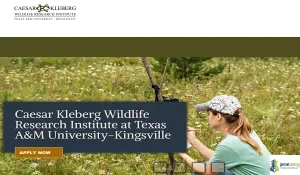
The 2026 Texas A&M University Kingsville Ungulate Spatial Ecology Assistantship, hosted by the Caesar Kleberg Wildlife Research Institute (CKWRI), is a dedicated academic support program designed to solve these challenges. By providing an $1,800 monthly stipend and a complete tuition reimbursement, CKWRI ensures that ambitious Master of Science students can focus entirely on their research into pronghorn and deer spatial ecology without financial stress.
2026 USA CKWRI Assistantship for Masters Students Summary Table
| Detail | Value |
|---|---|
| Host Organization | Caesar Kleberg Wildlife Research Institute (CKWRI) |
| Target Audience | Aspiring Master of Science Students |
| Primary Benefit | $1,800 Monthly Stipend plus Full Tuition |
| Program Type | Graduate Research Assistantship |
| Gender Focus | All Genders |
| Application Deadline | May 29 2026 |
About the 2026 USA CKWRI Assistantship for Masters Students
The Ungulate Spatial Ecology Assistantship is a unique 2.5 year program that splits time between Lubbock and Kingsville, Texas. This initiative aims to address critical questions regarding habitat connectivity for pronghorns and the spatial interactions between elk, mule deer, and white tailed deer. The program emphasizes a fast paced research environment where students work directly with private landowners and state agency biologists. Selected researchers join a collaborative team where they use radio telemetry and GPS data to influence wildlife management policies across the Texas Panhandle and Trans Pecos regions.
Core Objectives of the Program
- To support graduate students by providing specialized natural resource career funding for advanced wildlife degrees.
- To evaluate habitat connectivity and movement patterns of pronghorn populations in Texas.
- To analyze the spatial ecology of sympatric ungulate species within a multi cervid system.
Benefits of the 2026 CKWRI Wildlife Assistantship
- A monthly stipend of $1,800 to cover living and personal expenses.
- A full tuition waiver through the reimbursement of resident tuition fees.
- A medical benefits package available after the standard waiting period.
- Waiver of non resident tuition for out of state or international students.
- Direct funding for 2.5 years covering the entire duration of the degree.
- Practical experience in adult helicopter captures and fawn capture field work.
Eligibility and Requirements of the 2026 Ungulate MS Position
- Educational Background: Applicants must hold a Bachelors degree in wildlife management, natural resources, or ecology.
- Academic Performance: An undergraduate GPA of 3.0 or higher is mandatory for admission.
- Field Experience: Previous experience in animal handling and field research is highly required.
- Technical Skills: Preferred candidates will have experience using R, GIS, and statistical software.
- Physical Ability: The role requires the ability to walk or run over rugged terrain in extreme weather conditions.
- Legal Requirement: A valid United States driver license without restrictions is necessary for field operations.
Selection Criteria and Professional Impact
The selection committee prioritizes highly motivated individuals with a strong positive work ethic and experience in technical writing. Beyond the financial benefits, this assistantship impacts your career by providing high level exposure to private land management and state agency collaboration. Scholars who complete this program at CKWRI often graduate with multiple peer reviewed publications, making them top candidates for roles in federal wildlife agencies, university research positions, or private conservation organizations.
Step by Step Application Guide for the 2026 USA CKWRI Assistantship for Masters Students
Phase 1: Research and Program Evaluation
- Visit the official CKWRI and North Texas Research Program websites to understand their mission.
- Review the specific research goals of Dr. Levi Heffelfinger’s team regarding spatial ecology.
- Assess your interest in working with pronghorn, elk, and deer in remote Texas regions.
- Confirm that your professional goals align with the 2.5 year timeline of this Master of Science degree.
Phase 2: Document Compilation and Formatting
- Request your unofficial transcripts from your university to verify your GPA of 3.0 or higher.
- Update your Curriculum Vitae to include your most relevant animal handling and field experiences.
- Contact 3 to 5 professional references and ensure you have their current email and phone numbers.
- Compile all these documents into a single PDF file with your last name in the file title.
Phase 3: Crafting the Professional Cover Letter
- Write a 1 to 2 page cover letter detailing your specific interest in this assistantship.
- Highlight your most relevant field experiences such as radio telemetry or ungulate capture.
- Articulate your long term aspirations in wildlife management and conservation.
- Proofread the document to ensure the language is clear, professional, and free of errors.
Phase 4: Email Submission to Dr. Heffelfinger
- Compose an email to levi.heffelfinger@tamuk.edu with the subject line Ungulate M.S.
- Attach your single PDF file containing your cover letter, CV, references, and transcripts.
- Ensure you submit your application before the final deadline of May 29 2026.
- Apply early as interviews may be conducted before the closing date if a suitable candidate is found.
Phase 5: Monitoring Results and Interview Preparation
- Save a copy of your sent application for your personal records and future reference.
- Monitor your professional email inbox for any correspondence regarding an interview request.
- Prepare for a technical discussion about your experience with R, GIS, and rugged field conditions.
- Stay updated on the starting date which is scheduled for August 1 2026.
Jamnet Expert Advice (STAR/SMART Methods)
- Use the SMART Method: Be Specific about your spatial ecology targets, ensure your field data collection is Measurable, and keep your thesis Relevant to Texas wildlife.
- Apply the STAR Technique: In your cover letter, describe a Situation where you handled wild animals, the Task you managed, the Action you took, and the Result.
- Emphasis: Focus heavily on your ability to coordinate field activities and work closely with private landowners.
- Proactive Tip: Since this position is fast paced and collaborative, highlight your experience working as part of a research team in remote locations.
Deadline: May 29 2026
HOW TO APPLY
The application can be sent via email to levi.heffelfinger@tamuk.edu with a subject line “Ungulate M.S.”
Frequently Asked Questions (FAQ) About the 2026 CKWRI Assistantship
- Is the tuition fully covered? Yes the university waives non resident tuition and reimburses resident tuition fees each semester.
- What is the monthly stipend? Selected students receive a monthly salary of $1,800 plus a medical package.
- Where is the position located? The first half is based in Lubbock and the second half is in Kingsville, Texas.
- Do I need experience with GIS? While not mandatory, experience with GIS and R is highly preferred for this spatial ecology role.
- Is there an age limit? No but applicants must have a Bachelors degree and meet the graduate admission standards.
- What species will I study? The research focuses on pronghorn, elk, mule deer, and white tailed deer.
- How long is the funding available? Funding is guaranteed for 2.5 years from August 2026 to December 2028.
- Is field work required? Yes the role involves significant field work including helicopter captures and living in remote housing.
- Can I apply if I am not a US citizen? Yes non resident tuition is waived, but you must have a valid US driver license for field work.
- When is the application deadline? The official deadline is May 29 2026 though earlier applications are encouraged.