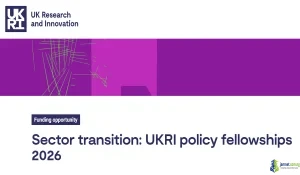
Applications are now open for the 2026 UKRI Policy Fellowships Program. This highly prestigious industry initiative is specifically designed to transform ambitious early career and mid career researchers into elite public policy specialists through a structured and comprehensive development program.

Join our Telegram Channel for Instant Scholarship Updates
By joining this world class governmental research network, successful candidates will learn how to turn advanced academic theories into actionable national legislation. This pathway provides the robust project funding, expert institutional backing, and elite stakeholder networks needed to excel in the competitive global public administration and scientific advisory sectors.
2026 UKRI Policy Fellowships Summary Table
| Detail Category | Value Information |
|---|---|
| Host Organisation | UK Research and Innovation UKRI and Host Partners |
| Target Audience | Early and Mid Career Academics and Researchers |
| Primary Benefit | Embedded Eighteen Month Policy Fellowship inside Government |
| Funding Range | One Hundred and Eighty Thousand to Two Hundred and Eighty Thousand Pounds |
| Total Positions | Fifty Dedicated Fellowship Openings across Host Partners |
| Application Deadline | September 10 2026 |
About the 2026 UKRI Policy Fellowships Scheme
The 2026 UKRI Policy Fellowships program represents a premier portal into world class public sector research and policy design. Funded by UK Research and Innovation in partnership with major research councils including the Arts and Humanities Research Council, Economic and Social Research Council, and the Medical Research Council, this competitive scheme facilitates temporary mobility between academic circles and prominent government bodies. The initiative allows selected fellows to provide expert scientific advice directly to decision makers on national priority areas while based at prominent host departments.
Prospective scholars joining this cohort become members of a highly selective intellectual community that values cross disciplinary innovation. The foundation provides extensive financial support, allowing researchers to co design and deliver high impact research projects while embedded within hosts such as the Cabinet Office, the Department for Transport, and the UK Health Security Agency. For investigators looking to transition their academic insights into national policy frameworks, this comprehensive system offers an unparalleled launchpad.
Why This Program Boosts Your Future Career
Securing a place in this elite cohort provides an unmatched advantage for your long term academic and professional progression. Transitioning into the heart of government allows you to lead Government Policy Research Fellowships that place you directly within national decision making rooms. Through hands on collaboration, you will learn to manage and design key public initiatives, utilizing prestigious Academic Knowledge Exchange Grants to support your independent scientific investigation on live administrative files.
Additionally, this prestigious pathway integrates doctoral candidates into active governmental networks where they work alongside preeminent civil service leaders. Gaining this hands on research experience enables scholars to secure Public Sector Transition Funding and publish in leading peer reviewed journals, building a stellar reputation early in their careers. Enrolling in these esteemed Evidence Based Policymaking Initiatives prepares you to secure senior academic tenure, direct regulatory compliance offices, and manage complex public policy programs globally.
Benefits of the 2026 UKRI Policy Fellowships
- Substantial Financial Awards: Access major funding awards ranging from £180000 for Core Policy tracks up to £280000 for Natural Hazards and Resilience tracks.
- Direct Government Immersion: Spend eighteen months embedded inside a UK government department, devolved administration, or What Works Network host.
- Robust Funding Model: Benefit from UKRI covering eighty percent of the full economic cost of your transition project.
- Elite Professional Network: Join a high profile cohort of fifty fellows working across diverse national agencies to share insights and build connections.
- Inclusive Working Support: Access flexible working structures, support for caring responsibilities, and dedicated disability accommodations during the application phase.
Eligible Fellowship Streams and Positions
- Core Policy Fellowships: Designed for early and mid career researchers to work on key public policy priority areas aligning with the Modern Industrial Strategy sectors. Hosts include the Cabinet Office, the Department for Business and Trade, the Department for Environment, Food and Rural Affairs, and the Ministry of Justice.
- Natural Hazards and Resilience Fellowships: Focused on natural hazards, pandemic preparedness, and national resilience infrastructure. Supported by the Department for Culture, Media and Sport, these roles address critical health risks, flooding, and utility security.
- What Works Innovation Fellowships: Open to researchers at all career stages, these placements focus on increasing the supply of and demand for evidence within the What Works Network, addressing homelessness, policing, and place based regional challenges.
Eligibility and Requirements
- Academic Credentials: Candidates must hold a doctorate or demonstrate equivalent professional research experience at a postdoctoral level.
- Career Stage Alignment: Placements are targeted at early to mid career academics, while the What Works Innovation pathway is open to applicants of all career stages.
- Institutional Affiliation: Applicants must be based at an eligible UKRI research organisation that can provide active mentorship throughout the term.
- Technical and Communication Skills: Show a strong track record of subject matter expertise, analytical capabilities, and the ability to translate complex data for non academic audiences.
- Clearance and Right to Work: Selected fellows must meet all security and nationality checks required by their specific government host before May 1 2027.
Required Documents Checklist
- Completed Online Application: A finalized candidate registration profile submitted through the official UKRI funding portal.
- Technical Project Proposal: A detailed research proposal outlining your methodology, goals, and alignment with host priorities.
- Academic Curriculum Vitae: A professional CV highlighting your research publications and your experience using expertise in non academic contexts.
- Institutional Endorsement Letter: A formal letter from your employing UKRI research organisation confirming mentorship support and fellowship terms.
- Equivalency Case Documentation: Supporting files proving a postdoctoral level of expertise if applying without a formal doctorate.
Five Phase Application Guide
Phase 1: Position Selection and Host Alignment
- Review the fifty specific fellowship positions across the core, resilience, and innovation streams to find roles matching your background.
- Identify the academic disciplines and specific methodologies required by your target government host partner.
- Draft a research proposal outline that addresses the key public policy challenges detailed in the position specifications.
- Reach out to your home university department to confirm they are an eligible UKRI research organisation.
Phase 2: Proposal Development and Budgeting
- Design your technical project proposal, ensuring it remains within the specific full economic cost limits of your chosen stream.
- Clearly articulate how your project will support knowledge exchange and porosity between academic and policy sectors.
- Structure your budget to ensure that UKRI eighty percent funding contribution is correctly calculated.
- Save all your drafts and proposal narratives as high resolution PDF files on your primary device.
Phase 3: Institutional Endorsement and Mentorship setup
- Connect with your university research office to secure a formal commitment to the UKRI model fellowship agreement.
- Draft your institutional support letters, detailing the personalized mentorship plan for early career applicants.
- Ensure that your academic curriculum vitae is formatted to highlight your stakeholder engagement and communication skills.
Phase 4: Online Portal Upload and Submission
- Access the official UKRI online funding portal and search for the 2026 Policy Fellowships opportunity.
- Set up your applicant account using a professional university email address.
- Upload your proposal, curriculum vitae, and your employing organisation letters of support in the designated fields.
- Submit your finalized application profile before the strict cutoff on September 10 2026 at 4:00 PM UK time.
Phase 5: Assessment and Security Screening
- Monitor your candidate portal for updates from the UKRI academic evaluation panel.
- Prepare to answer technical questions regarding your research methodology or public policy interest.
- Coordinate with your host department to initiate the mandatory security clearance, background investigations, and nationality checks.
Success Strategies
- Align with Specific Host Remits: Do not submit generic research plans. Tailor your proposal to solve the exact evidence and policy gaps highlighted by your target government department.
- Demonstrate Clear Translation Skills: Highlight past experiences where you successfully communicated complex scientific data to non academic audiences or community stakeholders.
- Secure Institutional Cooperation Early: Ensure your university administration is prepared to sign the fellowship agreement, avoiding onboarding delays prior to the May 2027 start date.
Common Mistakes To Avoid
- Applying with Prior UKRI Fellowship Experience: Submitting an application if you have already completed or are currently undertaking a UKRI policy fellowship, which leads to immediate rejection.
- Neglecting Host Security Prerequisites: Failing to review the specific nationality or security clearance requirements of your target department before applying.
- Exceeding Designated Budget Caps: Proposing a project budget that exceeds the strict full economic cost limits set for your specific fellowship stream.
- Submitting Duplicate Grant Proposals: Applying with a project that is already under active funding consideration with any other grant organisation.
- Failing to Show Local Academic Base: Attempting to apply without being based at an eligible UKRI research organisation that can provide structured mentorship.
Deadline: September 10 2026 (4:00 PM UK Time)
Frequently Asked Questions
- What is the maximum funding value available for these fellowships? The funding caps are £180000 for Core Policy tracks, £220000 for What Works tracks, and £280000 for Natural Hazards tracks, with UKRI covering eighty percent of the cost.
- What is the duration of the policy fellowship? The embedded fellowship placement runs for a fixed term of eighteen months.
- When does the fellowship program officially commence? Selected fellows are expected to begin their embedded placements in government on May 1 2027.
- Which career stages are eligible to apply? Core Policy and Natural Hazards tracks are aimed at early and mid career academics, while the What Works Innovation track is open to all career stages.
- Can I apply if I do not hold a PhD? Yes, you can apply if you can demonstrate equivalent postdoctoral level research experience within a professional research role.
- How many fellowship positions are available? There are a total of fifty specific fellowship positions open across the three sub cohorts.
- Are international scholars eligible to apply? Yes, but applicants must be based at an eligible UKRI research organisation and meet the specific nationality and security clearance requirements of their host partner.
- Can I apply to multiple fellowship roles? You can apply to only one specific fellowship position with a host partner during this funding cycle.
- Is travel required during the fellowship? Yes, fellows are expected to travel for knowledge exchange activities, cohort events, and policy meetings across the United Kingdom.
- Who provides the template for the fellowship agreement? A model agreement is developed by UKRI, but the final agreement is completed between the host partner and the employing research organisation.