Starting an independent research career after completing a PhD can be one of the most challenging stages in academia. While many researchers have the knowledge and enthusiasm to lead impactful studies, they often need additional support to develop competitive research proposals, build collaborations, and gain experience securing major research funding.

Join our Telegram Channel for Instant Scholarship Updates
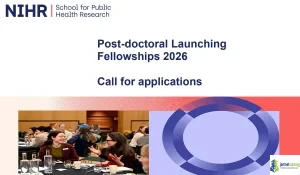
The 2026 NIHR School for Public Health Research (SPHR) Post-doctoral Fellowships has opened applications for researchers. These fellowships help early career researchers prepare for long-term success by providing structured mentoring, advanced training, collaborative opportunities, and protected time to develop future grant applications.
These fellowships are under the National Institute for Health and Care Research (NIHR) School for Public Health Research, and brings together several leading UK universities and research institutions committed to improving public health through high quality research.
2026 NIHR SPHR Post-Doctoral Fellowships Summary
| Details | Information |
|---|---|
| Fellowship Name | NIHR SPHR Post-doctoral Launching Fellowships |
| Host Organisation | NIHR School for Public Health Research (SPHR) |
| Fellowship Type | Postdoctoral Research Fellowship |
| Location | United Kingdom |
| Target Applicants | Early career postdoctoral researchers |
| Research Focus | Public Health Research |
| Duration | As specified by the host institution |
| Training | Research, leadership, public involvement, knowledge mobilisation, placements, grant development |
| Participating Institutions | Multiple leading UK universities and research centres |
About the NIHR SPHR Post-doctoral Fellowships
The NIHR SPHR Post-doctoral Fellowships is designed to support researchers as they transition from postdoctoral training into independent research careers.
This programme places strong emphasis on professional development. Fellows receive support to develop research ideas, strengthen grant writing skills, establish collaborations, and prepare competitive applications for future fellowships and research funding.
Throughout the programme, fellows work alongside experienced public health researchers while contributing to research that addresses important health challenges affecting communities across the United Kingdom.
The fellowship also encourages collaboration across institutions, allowing researchers to build networks that continue well beyond the fellowship period.
2026 National Institute for Health and Care Research SPHR Post-Doctoral Fellowships in the UK Benefits
- Fellows receive structured guidance to help them become competitive independent researchers.
- Participants are supported in developing pilot studies, preliminary research, and future fellowship or grant applications.
- The programme provides opportunities to learn innovative research methods, strengthen publication skills, and improve research design.
- Researchers receive specialist training in involving patients, practitioners, and communities throughout the research process.
- The fellowship helps researchers translate research findings into practical policies and real-world public health improvements.
- Fellows collaborate with experienced researchers across the NIHR SPHR network, creating valuable long-term professional relationships.
- Participants can undertake placements with organisations involved in public health practice, allowing them to gain practical experience outside academia.
Who Can Apply?
- The fellowship is intended for researchers who are committed to developing careers in public health research.
- Applicants should have completed doctoral research or be at an appropriate postdoctoral stage.
- Applicants should demonstrate a genuine interest in improving population health through research.
- Evidence of publications, previous research experience, and academic achievement will strengthen an application.
- The fellowship values researchers who can work across disciplines and build partnerships with practitioners, policymakers, and communities.
Research Areas
Public Mental Health
Research focused on preventing mental illness, improving wellbeing, and developing interventions that improve mental health across populations.
Researchers may explore how environments, behaviours, and social conditions influence mental wellbeing.
Children, Young People and Families
Projects may examine issues affecting children and young people while promoting diversity, inclusion, and community participation.
Researchers using qualitative, quantitative, or mixed research methods are encouraged.
Health Inequalities
Applicants interested in reducing health inequalities through innovative research approaches are encouraged to apply.
Topics may include:
- Social inequalities
- Ethnicity
- Gender
- Socioeconomic disadvantage
- Life course approaches
- Intersectionality
The programme welcomes projects that improve understanding of the factors contributing to unequal health outcomes.
Healthy Places and Healthy Planet
Researchers can investigate how local environments influence health.
Possible topics include:
- Commercial determinants of health
- Healthy communities
- Environmental health
- Community engagement
- Public policy
- Health behaviours
Innovative Public Health Methods
Applicants interested in developing new research methods, participatory approaches, or community-based research techniques are encouraged to apply.
Public Health Economics
Researchers with interests in economic evaluation, modelling, and efficient public health systems can benefit from specialised training in public health economics and decision-making.
Participating Universities and Research Centres
The fellowship is delivered through several leading public health research institutions across the United Kingdom.
University of Sheffield
Researchers can work on projects covering:
- Public mental health
- Children and families
- Health inequalities
- Healthy places
- Public health economics
The university also offers opportunities for placements with community organisations, local authorities, and other public sector partners.
London School of Hygiene & Tropical Medicine
Researchers benefit from internationally recognised expertise in epidemiology, public health policy, global health, and health systems research.
Imperial College London
The programme offers opportunities to collaborate with leading researchers working on innovative public health interventions and health improvement strategies.
University of Exeter
Applicants interested in behavioural science, implementation research, and public health evaluation can find strong research opportunities within the Exeter SPHR team.
Fuse Centre for Translational Research in Public Health
Fuse brings together multiple universities to translate research evidence into practical improvements in public health policy and practice.
LiLaC (Liverpool and Lancaster Universities Collaboration)
Researchers benefit from expertise in population health, health inequalities, and community-based research.
PHRESH Consortium
The PHRESH partnership offers collaborative research opportunities across several universities with expertise in public health and prevention research.
Training and Career Development
Fellows receive training in:
- Grant Writing
- Scientific Writing
- Knowledge Translation
- Community Engagement
- Research Leadership
Practice-Based Placements
Fellows can undertake placements with organisations that contribute to public health.
Examples include:
- Local authorities
- Community organisations
- Housing providers
- Transport organisations
- Leisure services
- Police services
- Fire and rescue services
- Third-sector organisations
How to Apply
Step 1
Review the research themes offered by participating institutions.
Step 2
Identify the university and research team that best matches your interests.
Step 3
Contact potential supervisors to discuss your proposed research before submitting your application.
Step 4
Prepare your research proposal and supporting documents.
Step 5
Submit your application according to the instructions provided by your chosen institution.
Common Mistakes to Avoid
Avoid these common mistakes when preparing your application:
- Submitting a proposal that does not align with the host institution’s expertise.
- Failing to contact potential supervisors before applying.
- Focusing only on academic outputs instead of public health impact.
- Ignoring opportunities for collaboration and community engagement.
- Waiting until the deadline to prepare your application.
Application Deadline: 9th October, 2026
CLICK HERE TO START YOUR APPLICATION
Frequently Asked Questions (FAQs)
Who can apply for the NIHR SPHR Post-doctoral Launching Fellowship?
The programme is intended for early career postdoctoral researchers who want to develop an independent career in public health research.
What research areas are available?
The fellowship supports research in public mental health, children and families, health inequalities, healthy places, innovative public health methods, and public health economics.
Which universities participate?
Participating institutions include the University of Sheffield, Imperial College London, the London School of Hygiene & Tropical Medicine, the University of Exeter, Fuse, LiLaC, and the PHRESH consortium, among others.
Are placements included?
Yes. Fellows may undertake placements with organisations such as local authorities, community organisations, housing providers, transport services, and other public health partners.
Why should I contact a supervisor before applying?
Discussing your research ideas with a potential supervisor helps ensure your proposal aligns with the expertise and priorities of the host institution, improving the quality of your application.