Strengthening agricultural systems in the face of rising global food costs is a major milestone for development planners working to protect vulnerable populations. For many low income nations, securing the extensive resources needed to build climate resilient farms and support local smallholders remains a persistent struggle. Navigating the competitive space of multilateral food security grants is often difficult because it is tough to find a program that provides flexible financing alongside direct integration with international technology networks.

Join our Telegram Channel for Instant Scholarship Updates
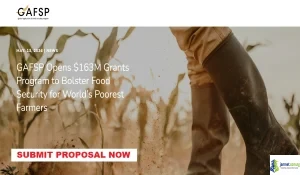
The 2026 GAFSP Call for Proposals, hosted by the World Bank, is a dedicated agricultural support initiative designed to foster global food security. By offering a massive pooled fund of US$163 million for transformative agricultural projects, GAFSP ensures that eligible national governments can focus entirely on improving crop yields and uplifting rural communities without bearing unsustainable national debt.
GAFSP Call for Proposals Summary Table
| Detail | Value |
|---|---|
| Host Organization | World Bank and
Global Agriculture and Food Security Program (GAFSP) |
| Target Audience | Low Income Country Governments |
| Primary Benefit | Share of US$163 Million Grant Funding |
| Program Type | Multilateral Agricultural and Food Security Program |
| Gender Focus | Inclusive with Women Empowerment Focus |
| Application Deadline | September 15 2026 |
About the Initiative 2026
The Global Agriculture and Food Security Program represents far more than a basic development grant; it serves as a premier international platform for agricultural reform and sustainable land stewardship. Launched to combat the devastating effects of rising food prices, this platform has successfully mobilized over US$2.46 billion in donor contributions since its inception in 2010. The ninth Call for Proposals is strategically designed to address the alarming drop in global development assistance by providing direct, country led grant financing. Selected national projects are integrated into the wider World Bank ecosystem, combining public and private financing to connect smallholder farmers with vital digital marketplaces, robust cooperatives, and local agribusiness partners.
Core Objectives of the Program
- To support low income nations by offering high value multilateral food security grants and technical assistance.
- To advance global climate resilient farming grants by promoting ecological adaptation and sustainable yields.
- To foster inclusive rural economies with a specific emphasis on women empowerment and child nutrition.
Why This Grant Program is Vital
The ninth funding cycle arrives at a critical juncture for international development as multiple overlapping crises threaten global food networks:
- Rising Global Conflict: Modern geopolitical tensions continue to disrupt shipping lanes and energy supplies, driving up food distribution and fertilizer costs for importing nations.
- Climate Change Pressures: Severe droughts, unpredictable flooding, and shifting weather patterns continue to devastate smallholder farms in fragile environments.
- Declining Development Assistance: Global development aid dropped by 23 percent in 2025, leaving many low income countries with limited fiscal space to support their citizens.
Benefits of the 2026 GAFSP Grants
- Direct access to a portion of the US$163 million pooled multilateral grant fund.
- Highly flexible, non reimbursable financing that does not add to national debt burdens.
- Expert technical assistance from World Bank staff to design and execute large scale agricultural projects.
- Integration with digital networks like AgriConnect to link rural farmers with global buyers and mobile markets.
- Proven institutional models that support post conflict reconstruction and peacebuilding.
- Broad capacity building for local cooperatives, microfinance networks, and local communities.
Eligibility and Requirements for the GAFSP Call
- Country Status: The program is open to eligible low income countries, with a strong preference for fragile and conflict affected states.
- Proposal Ownership: Submissions must be country led and deeply rooted in the national agricultural development priorities of the applying government.
- Integration Strategy: Proposals should combine climate adaptation, gender inclusion, and improved nutrition into a single cohesive plan.
- Institutional Alignment: Projects must show a clear pathway for collaboration between public ministries, private agribusinesses, and local cooperatives.
- Time Commitment: Applying governments must be prepared to implement multi year development projects starting in early 2027.
- Submission Deadline: All completed proposal files must be formally uploaded before September 15 2026.
Step by Step Application Guide for GAFSP Funding
Phase 1: National Consultation and Priority Mapping
- Convene a meeting of national agricultural, environmental, and financial ministries.
- Align your proposed project with existing country led agricultural development plans.
- Identify the specific vulnerable regions and smallholder communities that require urgent support.
- Determine how the project will integrate with regional digital tools like the AgriConnect initiative.
Phase 2: Project Co Design and Partner Engagement
- Engaged local farmer cooperatives, women advocacy groups, and private agribusinesses in the planning stage.
- Formulate clear project components addressing crop yields, climate adaptation, and nutritional education.
- Establish a robust monitoring and evaluation framework to track project milestones.
- Secure official endorsement letters from all key participating institutional partners.
Phase 3: Drafting the Technical Proposal
- Write a detailed technical proposal outlining the project methodology, timeline, and budget.
- Clearly explain how your project will address the specific challenges of conflict, climate change, or economic shocks.
- Highlight past success stories, such as the GAFSP project in Liberia, to justify your chosen strategy.
- Review your written drafts to ensure the English is simple, clear, and completely hyphen free.
Phase 4: Submitting Through the World Bank Portal
- Access the official Global Agriculture and Food Security Program application portal online.
- Complete the administrative fields with your national and institutional contact details.
- Upload your comprehensive technical proposal, budget files, and ministry endorsements as separate PDF files.
- Submit your completed application package before the absolute deadline of September 15 2026.
Phase 5: Participating in Webinars and Review
- Save a digital confirmation of your submitted proposal package and reference numbers.
- Register your technical team for the scheduled GAFSP informational webinars and live FAQ sessions.
- Monitor your official communication channels for any requests for clarification from the steering committee.
- Prepare your national administrative team for the official award announcements in January 2027.
Jamnet Expert Advice (STAR/SMART Methods)
- Use the SMART Method: Be Specific about your agricultural production targets, ensure your nutritional outcomes are Measurable, and keep your goals Relevant to national climate resilience.
- Apply the STAR Technique: When describing previous agricultural successes in your proposal, outline the difficult ecological Situation, the national Task, the Action your government took, and the positive Result.
- Emphasis: Put a strong focus on showing how your project will empower women farmers and improve children nutrition in underserved districts.
- Proactive Tip: Design your proposal as an integrated solution rather than a collection of isolated tasks, as the evaluation board highly prioritizes projects that solve multiple challenges simultaneously.
Deadline: September 15 2026
HOW TO SUBMIT PROPOSAL
Documents should be submitted by email from a government official email account to: gafspinfo@gafspfund.org.
Frequently Asked Questions (FAQ) About the GAFSP Call
- What is the total funding available in this call? The ninth Call for Proposals offers a total pooled grant fund of US$163 million.
- Who is eligible to apply for these grants? Eligible national governments of low income countries, especially those in fragile or conflict affected regions.
- Do these grants have to be repaid? No GAFSP provides non reimbursable grant financing that does not increase national debt.
- When is the final application deadline? All proposals must be submitted through the official portal by September 15 2026.
- When will the grant awards be announced? Successful countries will be officially announced in January 2027.
- What are the priority focus areas of this call? The program focuses on food security, crop yields, climate adaptation, rural livelihoods, nutrition, and women empowerment.
- How does this connect to digital agriculture? The program aims to integrate smallholders with digital marketplaces and mobile farming apps through initiatives like AgriConnect.
- Is there support available during the application period? Yes GAFSP will provide informational webinars, guidance materials, and technical clarification sessions.
- What organization hosts GAFSP? The program is officially hosted and administered by the World Bank.
- Can private companies apply directly? While the call targets national public sector projects, GAFSP strongly encourages partnerships that connect public ministries with private agribusinesses and local cooperatives.