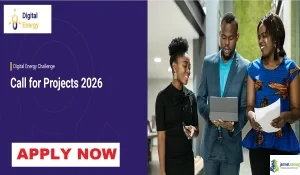
Scaling digital infrastructure to solve energy access challenges is a major milestone for tech entrepreneurs across the African continent. However, the high capital requirements for R&D and the difficulty of securing Alternative Financing often prevent innovative SMEs from achieving Financial Significance while attempting to modernize aging utility grids or accelerate the green energy transition.
Join our Telegram Channel for Instant Scholarship Updates
The 2026 Digital Energy Challenge Call for Projects is a premier global initiative designed to bridge this gap. With a total budget of €827K, the challenge provides the Economic Stability and technical support required for high-growth SMEs to implement AI-enabled solutions that improve operational efficiency for energy utilities in 51 African nations.
2026 Digital Energy Call for Projects (€827K Grants for SMEs) Summary Table
| Detail | Value |
|---|---|
| Host Organization | Agence Française de Développement (AFD) |
| Target Audience | Innovative SMEs (under 250 employees) |
| Primary Benefit | Grants up to €400K and Bootcamp Support |
| Program Categories | Tech Accelerator & Partnership (with AEDC) |
| Budget Allocation | €827,000 Total |
| Application Deadline | June 17, 2026 |
About the 2026 Digital Energy Call for Projects (€827K Grants for SMEs)
The Digital Energy Challenge is an elite intervention in the global Financial Services Ecosystem of green technology and digital transformation. The 2026 call invites SMEs to propose software, data, and cloud-based technologies that can revolutionize energy access. The program is divided into two strategic tracks: the “Tech Accelerator” for projects across 51 eligible African countries, and a specialized “Partnership” track in Nigeria, developed in collaboration with the Abuja Electricity Distribution Company (AEDC).
Winners gain more than just financial support; they receive Strategic Management guidance through intensive bootcamps and expert project management. This initiative serves as a foundation for future Corporate Restructuring of the African energy sector, moving away from manual systems toward automated, AI-driven efficiency. By providing grants for equipment and training, the program facilitates Equity Capital Raising of intellectual property and local capacity, ensuring that digital energy solutions are both scalable and sustainable.
Core Objectives of the Program
- To increase energy access and accelerate the energy transition through digital innovation.
- To provide SMEs with the Economic Stability needed to test and implement R&D-heavy solutions.
- To foster collaboration between tech innovators and African utilities like the AEDC.
Benefits of the 2026 Digital Energy Call for Projects (€827K Grants for SMEs)
- Grants up to €400K for the Partnership track and €150K for the Tech Accelerator.
- Comprehensive coverage of costs for equipment, software, and specialized training.
- Hands-on guidance and sector insights through a dedicated expert bootcamp.
- High visibility and networking via communication campaigns piloted by the AFD.
- Access to the exclusive Digital Energy Community for long-term collaboration.
- Strategic support for project management to ensure successful implementation within 12 months.
Eligibility and Requirements of the 2026 Digital Energy Challenge: €827K Grants for Digital Energy SMEs
- Company Size: Must employ fewer than 250 people with an annual turnover under €50M.
- Innovation Level: Projects must be digital by nature and include a clear R&D dimension.
- Project Stage: Solutions must be beyond the ideation stage (already piloted/MVP).
- Implementation: Must be implementable within a 12-month timeframe.
- Independence: SMEs must be independent and free of conflicts of interest with the AEDC.
- Geographic Scope: Projects must be located in one of the 51 specified African countries.
Detailed Application Phases for the 2026 Digital Energy Challenge
Phase 1: Category Selection and Eligibility Check
- Determine if your project fits the “Tech Accelerator” (multi-country) or “Partnership” (Nigeria/AEDC) category.
- Verify that your SME meets the turnover and employee count requirements for Financial Significance.
- Audit your project to ensure it is “digital by nature” (e.g., cloud-based, AI-enabled, or data-driven).
- Confirm that your solution has been successfully piloted and is ready for scaling.
Phase 2: R&D and Technical Documentation
- Prepare a detailed project plan that highlights the R&D dimension of your digital solution.
- Define your thematic priorities, such as improving grid efficiency or increasing rural energy access.
- Align your technical proposal with Strategic Management standards for energy utilities.
- Ensure your project does not depend on pending regulatory changes for its 12-month implementation.
Phase 3: Budgeting and Financial Planning
- Draft a budget proposal outlining how the grant (up to €400K) will be used for equipment and software.
- Explain how the funding will contribute to the Economic Stability of your project during the implementation phase.
- Detail any additional Alternative Financing your company has secured to support the project.
- Review the ownership criteria to ensure your SME remains eligible as an independent entity.
Phase 4: Application Submission and Category Management
- Download the specific application forms for your chosen category/categories.
- If applying for both tracks, ensure you submit separate, unique applications for each.
- Upload all supporting R&D documents and proof of your pilot project’s success.
- Finalize your submission through the official portal before the June 17, 2026, deadline.
Phase 5: Selection, Bootcamp, and Deployment
- Participate in the screening process and potential technical interviews.
- If selected, attend the Digital Energy Bootcamp for hands-on guidance and sector networking.
- Coordinate with AFD and AEDC (if applicable) to begin the 12-month implementation phase.
- Leverage the Digital Energy Community to gain visibility and scale your solution across the continent.
Jamnet Expert Advice (STAR and SMART Methods)
- Use the SMART Method: Be Specific about the utility problem you solve, ensure your implementation timeline is Measurable, and keep your R&D goals Achievable within 12 months.
- Apply the STAR Technique: Describe an energy-related Situation you encountered, the Task your software was designed for, the Action you took during the pilot, and the Resulting efficiency gain.
- Emphasis: Focus on “Local Relevance.” Projects adapted to the local context are highly favored, especially from African-based SMEs.
- Proactive Tip: Ensure your “R&D dimension” is clearly articulated; the committee is looking for scientific and technical rigor, not just simple software apps.
Deadline: June 17, 2026
HOW TO APPLY
Frequently Asked Questions (FAQ) About the 2026 Digital Energy Challenge: €827K Grants for Digital Energy SMEs
- Who can apply for the Digital Energy Challenge? Innovative SMEs with fewer than 250 employees and a turnover of less than €50M can apply.
- What is the difference between the Tech Accelerator and the Partnership track? The Tech Accelerator is for projects in 51 African countries; the Partnership track is specifically for projects in Nigeria with the AEDC.
- How much funding can a winner receive? Partnership winners can receive up to €400K, while Tech Accelerator winners can receive up to €150K.
- Is this open to startups in the ideation phase? No, projects must be beyond the ideation stage and have already been piloted.
- Can international companies apply? Yes, but local African companies are strongly encouraged and receive favorable consideration.
- What thematic areas should projects address? Projects should focus on increasing energy access, accelerating the energy transition, or improving utility efficiency.
- How long should the project take to implement? Projects must be implementable within a 12-month period.
- What kind of technology is the challenge looking for? Digital solutions including AI, software, telecom, data systems, and cloud-based technologies.
- Are there any countries excluded? The challenge supports projects in 51 specified African countries listed in the call.
- When is the application deadline? The deadline to submit your proposal is June 17, 2026.