Applications (nominations) are now open for the 2026 KidsRights International Children’s Peace Prize, recognizing a young changemaker aged 12 to 18 who has demonstrated a courageous fight for children’s rights with concrete positive results. The winner receives the Nkosi statuette, the Desmond Tutu Study and Care Fund, and the International Children’s Peace Prize Project Fund, which includes €50,000 for the winner’s project. The deadline for nominations is 31st March 2026 at 17:00 CET.
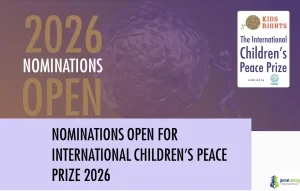
KidsRights International Children’s Peace Prize 2026 Summary Table
| Feature | Detail |
|---|---|
| Host Institution | KidsRights Foundation |
| Sponsor | KidsRights Foundation |
| Academic Level | Global Youth Award / Children’s Rights Advocacy |
| Eligible Countries | All Countries (Global Eligibility) |
| Target Group | Young Changemakers (Age 12 to 18) |
| Reward | €50,000 Project Fund, Education Fund, Global Platform, Statuette |
| Presentation | Annually by a Nobel Peace Laureate |
| Previous Laureates | Malala Yousafzai, Greta Thunberg, etc. |
| Deadline | 31st March 2026 (17:00 CET) |
KidsRights International Children’s Peace Prize 2026
Launched in 2005 at the World Summit of Nobel Peace Laureates in Rome, the International Children’s Peace Prize is one of the most prestigious youth awards globally. It is awarded annually to a young changemaker who demonstrates extraordinary commitment and impact in fighting for the rights of the child, following in the footsteps of previous laureates like Malala Yousafzai and Greta Thunberg.

Join our Telegram Channel for Instant Scholarship Updates
The award serves not only as recognition but also as a powerful catalyst, providing the winner with the necessary funds and a global platform to amplify their message and expand the results of their changemaking efforts. The Prize is presented during a globally celebrated and broadcast ceremony, ensuring the winner’s voice reaches international decision-makers and the public.
Support Benefits
The prize offers a multi-faceted reward system that supports the winner’s project, education, and global influence.
Tier 1: Project Amplification and Global Reach
- International Children’s Peace Prize Project Fund (€50,000): The winner receives €50,000 specifically allocated to continue and expand their changemaking project or cause.
- Global Platform: The prize grants the winner access to a global platform designed to amplify their message, significantly increasing the visibility and reach of their work and impact.
Tier 2: Education and Related Projects Support
- Desmond Tutu Study and Care Fund: This fund is established to contribute directly to the winner’s educational needs and personal care, ensuring their advocacy work does not compromise their schooling and well-being.
- KidsRights Related Investment (€25,000): KidsRights further invests an additional €25,000 in projects of other young changemakers related to the theme or cause championed by the winner, extending the positive impact of the Prize.
Tier 3: Symbolic Recognition
- The Nkosi Statuette: The winner is presented with the Nkosi statuette, the symbolic representation of the International Children’s Peace Prize.
Eligibility Requirements for Nomination
The nomination process focuses strictly on the changemaker’s age, impact, and commitment to children’s rights.
- Age Requirement: The nominated child must be above 12 years and under 18 years of age at the time of nomination.
- Location: The child can be from anywhere in the world.
- Advocacy History: The child must have a clear and verifiable history of fighting courageously for the rights of children.
- Tangible Impact: The changemaking efforts must have demonstrably led to a concrete positive result on the rights of children, whether locally, nationally, or globally.
- Consent: The child must have agreed to be nominated for the International Children’s Peace Prize.
- Nominee Type: Individuals or groups of children (up to a maximum of five) can be nominated. Organizations, as entities, cannot be nominated.
How to Nominate a Young Changemaker (Step by Step)
The nomination process requires a careful submission detailing the young changemaker’s history and impact.
- Identify and Secure Consent: Identify a child (age 12-18) with a strong record of fighting for children’s rights and secure their explicit agreement to be nominated for the International Children’s Peace Prize.
- Gather Evidence of Impact: Collect comprehensive documentation, testimonies, and media evidence that clearly demonstrates the child’s history of activism and the concrete positive results achieved (locally, nationally, or globally).
- Complete Nomination Form: Access the official KidsRights nomination platform (via the link below) and accurately fill out all required fields, detailing the nominee’s story, efforts, and impact.
- Submit Before Deadline: Ensure the complete nomination package is submitted on the platform before the strict deadline of 31st March 2026, 17:00 CET.
Application Deadline: 31st March 2026 (17:00 CET)
CLICK HERE TO NOMINATE
For more Information Click HERE
Frequently Asked Questions (FAQ)
1. What is the maximum age limit for a nominee?
The nominee must be a child who is under 18 years of age at the time of nomination, and also must be above 12 years old.
2. Can groups of children be nominated for the prize?
Yes, nominations are accepted for individuals or for groups consisting of not more than five children who have worked together on a cause.
3. Is the prize open only to children from specific countries?
No. The International Children’s Peace Prize is a global award, and a child can be nominated from anywhere in the world.
4. What is the purpose of the Desmond Tutu Study and Care Fund?
The Desmond Tutu Study and Care Fund is dedicated to supporting the winner’s education and personal care, ensuring they can continue their studies while pursuing their advocacy work.
5. What is the amount of funding available for the winner’s project?
The winner’s specific project receives €50,000 from the International Children’s Peace Prize Project Fund.
6. Can an organization nominate itself or be nominated by others?
No, the award is strictly for individuals or small groups of children. Organizations cannot be nominated for the International Children’s Peace Prize.
7. Is the nominee required to agree to the nomination?
Yes, one of the crucial requirements is that the child (or children) must have agreed to be nominated for the International Children’s Peace Prize.
8. What does “concrete positive result” mean for eligibility?
It means the nominee’s efforts must have led to a demonstrable, verifiable improvement or change related to children’s rights, whether locally, nationally, or internationally.
9. Who presents the International Children’s Peace Prize?
The Prize is presented annually by a Nobel Peace Laureate, highlighting its significance and prestige on the global stage.
10. When is the strict application deadline?
The deadline for submitting nominations for the 2026 Prize is 31st March 2026 at 17:00 CET (Central European Time).