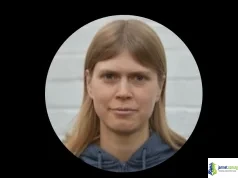
Dr Bill Broadhurst’s research focuses on the Modular Polyketide Synthase Structural Dynamics, studying how these massive integrated enzyme complexes—nature’s assembly lines—produce complex bioactive molecules like antibiotics and toxins. His lab utilizes NMR spectroscopy and isothermal calorimetry (ITC) to reveal the atomic-level conformational changes and transient interfaces that govern the PKS catalytic cycle. A key finding is the dual nature of PKS control: specific protein-protein recognition for chain elongation versus sole substrate chemistry recognition for final product release. This work has direct, powerful implications for engineering hybrid PKS systems to create novel compounds.
Dr Bill Broadhurst: Research Group Leader | Modular Polyketide Synthase Structural Dynamics

Quick Profile Summary
| Detail | Content |
|---|---|
| Position | Research Group Leader / Principal Investigator |
| Affiliation | University of Cambridge |
| Key Background | NMR Spectroscopy, Protein Dynamics, Enzyme Mechanism |
| Specialization | Structural Biology of Megasynthases, Modular Polyketide Synthases (PKSs) |
| Core Focus | Understanding conformational changes and molecular recognition that control the PKS assembly line and guide polyketide chain growth. |
Introduction and Research Niche
The Broadhurst Group investigates the fundamental principles governing Modular Polyketide Synthase Structural Dynamics. Modular PKSs are nature’s most sophisticated enzymatic assembly lines, responsible for synthesizing a vast array of biologically active natural products, including critical antibiotics. These complexes organize clusters of catalytic domains (known as modules) to sequentially build up a complex molecule.

Join our Telegram Channel for Instant Scholarship Updates
Dr. Broadhurst’s research is dedicated to resolving the critical, elusive questions of how these systems are orchestrated. Using NMR spectroscopy to capture high-resolution structures and isothermal calorimetry (ITC) to quantify molecular interactions, the lab characterizes the transient interfaces and global conformational rearrangements that occur during the catalytic cycle. A particular focus is the Acyl Carrier Protein (ACP) domain, the “swinging arm” that carries the growing substrate chain between active sites.
Graduate Research Opportunities (For Prospective Applicants)
The Broadhurst Group welcomes inquiries from candidates with strong backgrounds in chemistry, biochemistry, biophysics, and structural biology. Research opportunities are available across three main, interconnected areas:
1. Research Stream: PKS Quaternary Structure and Conformational Change
This stream is focused on the core structural mechanisms that drive the PKS process.
- Topics: Investigating how the quaternary structure of a PKS module rearranges during a catalytic cycle using solution-state NMR. Determining the structural influence of the ACP domain on the programming and fidelity of the complex PKS mega-enzymes. Analyzing transient interfaces between catalytic domains (e.g., ketoreductase and ACP) versus final product release mechanisms (e.g., terminal thioesterase recognition).
2. Research Stream: Precision Enzyme Engineering
This stream applies fundamental mechanistic knowledge toward the synthetic biology goal of creating new molecules.
- Topics: Utilizing mutagenesis and structural insight as ‘precision surgery’ to expand the substrate selectivity and reaction specificity of existing PKS systems. Establishing general rules that could guide the rational assembly of hybrid PKS systems to generate novel bioactive compounds, thereby circumventing nature’s restrictive design constraints.
3. Interdisciplinary Focus: Bioinformatics and Natural Product Discovery
This stream combines wet-lab understanding with computational prediction tools.
- Topics: Developing and applying bioinformatics tools to analyze environmental DNA (eDNA) or genomic data from uncharacterized organisms. The objective is to predict the structures of new natural products by analyzing the sequence architecture of novel PKS clusters, thereby linking genotype directly to predicted chemotype.
Key Awards and Professional Roles
Note: Specific award details were not provided, but roles are inferred from publication history and group leader position.
| Detail | Role / Status | Institution / Body |
|---|---|---|
| Principal Investigator | Head of Broadhurst Group | University of Cambridge |
| Expertise | Leading expert in NMR of large, dynamic enzyme complexes | Structural Biology Community |
| Early Career Impact | Significant contributions to defining PKS docking domain structure | Chemistry & Biology |
| Methodology Focus | Specialist in high-resolution NMR and biophysical characterization | Specialist Field |
Selected Publications
Journal Article (2019): ‘Modular type I polyketide synthase acyl carrier protein domains share a common N-terminally extended fold’. Sci. Rep., 9(1):2325.
Journal Article (2017): ‘Dissecting how modular polyketide synthase ketoreductases interact with acyl carrier protein-attached substrates’. Chem. Commun., 53(83):11457-11460.
Journal Article (2016): ‘Sticky swinging arm dynamics: studies of an acyl carrier protein domain from the mycolactone polyketide synthase’. Biochem. J., 473(8):1097-1110.
Journal Article (2016): ‘Broadening substrate specificity of a chain-extending ketosynthase through a single active-site mutation’. Chem. Commun., 52(54):8373-8376.
Journal Article (2003): ‘The structure of docking domains in modular polyketide synthases’. Chem. Biol., 10(8):723-731.
Contact Information
Prospective students interested in supervision should reach out via the following channels:
| Detail | Content |
|---|---|
| Email Address | rwb1002@cam.ac.uk |
| Location | University of Cambridge |
| University Profile Page | Bill Broadhurst |
Supervisory Ethos
Dr Broadhurst’s lab offers a uniquely challenging and rewarding environment for doctoral studies. Supervision emphasizes structural and mechanistic rigor, training researchers to use complex biophysical techniques, primarily NMR, to answer critical questions about Modular Polyketide Synthase Structural Dynamics. He seeks candidates who are passionate about the intersection of chemistry and biology, possess excellent problem-solving skills, and are comfortable with the technical demands of high-resolution structural biology. The ethos is one of discovery—finding the physical “rules” that govern molecular machinery—with a strong focus on publishing high-impact, mechanism-driven research that informs synthetic biology and drug discovery efforts.
Frequently Asked Questions (FAQ)
1. What are Modular Polyketide Synthases (PKSs)?
PKSs are large, multi-domain enzymes that act as enzymatic assembly lines to synthesize complex organic molecules, including many antibiotics and toxins, by sequentially adding and modifying small building blocks.
2. What techniques are central to the lab’s research?
The lab primarily uses NMR spectroscopy to determine protein structure and dynamics in solution, and Isothermal Titration Calorimetry (ITC) to measure the thermodynamics of protein-protein and protein-substrate interactions.
3. Does the research involve wet-lab or dry-lab work?
The projects are heavily based on wet-lab structural biology and biochemistry, involving protein expression, purification, sample preparation (often with isotopes for NMR), and data acquisition. There is also a component of dry-lab bioinformatics for sequence analysis and structure prediction.
4. What kind of background is ideal for a PhD candidate?
The ideal candidate has a strong foundation in physical or biological chemistry, biochemistry, or biophysics. Prior experience with NMR, protein expression/purification, or enzyme kinetics is a significant advantage, but high analytical ability is key.
5. What is the Acyl Carrier Protein (ACP) and why is it important?
The ACP is a small domain within each PKS module that acts as a “swinging arm.” It carries the growing polyketide chain and shuttles it between different catalytic sites in the assembly line. Its movement and interactions are key to controlling chain growth and fidelity.
6. What is the research impact on drug discovery?
By understanding the Modular Polyketide Synthase Structural Dynamics, the lab provides the blueprint for engineering hybrid PKS systems. This allows scientists to mix and match different PKS modules to synthesize completely novel, non-natural polyketides with potential as new drugs or antibiotics.
7. Is the focus purely mechanistic, or also evolutionary?
The primary focus is mechanistic (how things work), but the group also looks at the structural folds and mechanisms conserved across different PKS systems, informing evolutionary understanding of these mega-enzymes.
8. What specific compound is studied in the lab?
The lab has focused significant attention on the PKS system responsible for producing mycolactone, a polyketide toxin, using it as a model system to understand general PKS assembly line rules.
9. Are there opportunities for computational modeling?
Yes, beyond pure bioinformatics, the lab seeks to interpret the dynamic data from NMR and other techniques through molecular modeling and simulation, especially regarding the rearrangement of the PKS quaternary structure.
10. What is the typical duration for a structural biology project in this lab?
Projects often involve significant time for protein preparation and optimization of NMR experiments. Candidates should expect a multi-year project dedicated to solving a single, high-impact mechanistic problem related to Modular Polyketide Synthase Structural Dynamics.