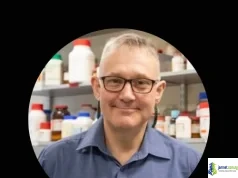
Professor Chris Howe’s group investigates the Biochemistry of Photosynthetic Organisms and Their Relatives across a highly interdisciplinary spectrum. Research focuses on how photosynthetic life (like cyanobacteria and dinoflagellates) manages stressful light intensities and the potential to exploit these organisms for biotechnological purposes, such including direct electricity production via biophotovoltaics (BPV). A significant component of the work involves the dinoflagellates, which are crucial for coral reef health, studying their unusual chloroplast genome, and the mechanisms behind coral bleaching. Extending this evolutionary link, the group studies the remnant (non-photosynthetic) chloroplast genome (apicoplast) in the closely related malaria parasite, Plasmodium, with a view to developing novel antimalarials.
Professor Chris Howe: Group Leader | Biochemistry of Photosynthetic Organisms and Their Relatives

Introduction and Research Niche
Professor Chris Howe’s research stands at the interface of Biochemistry, Genetics, and Biotechnology, focusing on the Biochemistry of Photosynthetic Organisms and Their Relatives. His group investigates the sophisticated molecular mechanisms used by photosynthetic life—from plants and cyanobacteria to dinoflagellates—and explores the evolutionary inheritance of these systems in non-photosynthetic parasites like the malaria parasite Plasmodium.

Join our Telegram Channel for Instant Scholarship Updates
The work is driven by both fundamental scientific curiosity and a commitment to addressing global challenges, including renewable energy production, coral reef preservation, and the development of novel antimalarials. Using an innovative and eclectic mix of molecular biology, biophysical, and phylogenetic techniques, the Howe Group is continuously revealing new facets of life’s essential chemical processes.
Graduate Research Opportunities
The Howe Group offers diverse and interdisciplinary PhD opportunities structured around the following key research streams:
1. Research Stream: Photosynthetic Stress Protection and Green Energy
This stream explores the dual nature of light: essential for photosynthesis, yet dangerous in excess. It also seeks to harness the natural electrical properties of photosynthetic microorganisms for sustainable technology.
- Topics: Investigating the biochemical pathways that protect photosynthetic organisms against damaging light intensities, including the potential role of recently discovered proteins like cytochrome c6A. A major applied focus is understanding how and why photosynthetic microorganisms (like cyanobacteria) generate extracellular electric currents and optimizing this process for renewable biophotovoltaic (BPV) energy production, leveraging the pathways of photosynthetic and respiratory electron transport.
2. Research Stream: Dinoflagellate Genetics and Coral Bleaching
Dinoflagellates are the symbiotic algae essential for coral health. Their breakdown leads to coral bleaching, a critical climate challenge. This work focuses on the highly unusual genetic structure of these organisms.
- Topics: Studying the unique and complex dinoflagellate chloroplast genome. Utilizing the newly developed methods for genetic modification of dinoflagellates to dissect the molecular events that occur during the initial stages of coral bleaching. Projects aim to understand how disturbances in dinoflagellate photosynthesis lead to the breakdown of the alga-coral symbiosis.
3. Interdisciplinary Focus: The Remnant Chloroplast (Apicoplast) in Malaria
Plasmodium, the causative agent of malaria, is a close non-photosynthetic relative of dinoflagellates. Unexpectedly, it retains a remnant chloroplast, known as the apicoplast, which holds a small, essential genome.
- Topics: Investigating the expression of this remnant chloroplast genome in Plasmodium and related apicomplexan parasites. By characterizing the essential proteins (such as pentatricopeptide repeat proteins) required for apicoplast function, this research seeks to validate new molecular targets for the development of novel antimalarial drugs, exploiting the parasite’s photosynthetic ancestry.
Key Awards and Professional Roles
| Detail | Role / Status | Institution / Body |
|---|---|---|
| Research Focus | Photosynthesis and Genomics | University of Cambridge |
| Key Contribution | Discovery of the moss-powered radio receiver | Biophotovoltaics (BPV) |
| Methodological Expertise | Chloroplast/Apicoplast Genetics | Molecular Biology and Evolution |
| Key Concept | Evolutionary Analysis (Phylomemetics) | Phylogenetic Applications |
Selected Publications
Journal Article (2019): “Genetic transformation of the dinoflagellate chloroplast.” eLife.
Journal Article (2019): “An essential pentatricopeptide repeat protein in the apicomplexan remnant chloroplast.” Cell Microbiol.
Journal Article (2018): “Enhancing power density of biophotovoltaics by decoupling storage and power delivery.” Nat. Energy.
Journal Article (2016): “Photosynthetic, respiratory and extracellular electron transport pathways in cyanobacteria.” Biochim. Biophys. Acta.
Review Article (2011): “Phylomemetics – evolutionary analysis beyond the gene.” PLoS Biol.
Contact Information
Prospective students interested in supervision should reach out via the following channels:
| Detail | Content |
|---|---|
| Email Address | ch26@cam.ac.uk |
| University Profile Page | Link to official University faculty page |
Supervisory Ethos
Professor Howe encourages students to embrace interdisciplinary thinking and to be comfortable applying tools from molecular biology, genetics, and even computational analysis to complex biological problems. His lab fosters a highly collaborative and supportive atmosphere, where intellectual risk-taking is valued. Mentorship focuses on developing rigorous experimental design, strong analytical skills, and the ability to clearly articulate novel findings across different scientific audiences. He seeks curious, adaptable candidates with backgrounds in Biochemistry, Genetics, Plant Sciences, or Microbiology who are excited by the potential of Biochemistry of Photosynthetic Organisms to address global health and energy challenges.
Frequently Asked Questions (FAQ)
1. What is a “non-photosynthetic relative” in the context of your lab?
The most prominent example is the malaria parasite Plasmodium. It evolved from a photosynthetic ancestor (an alga) but lost the ability to photosynthesize. It retains the apicoplast, a remnant of the chloroplast, which is now critical for its survival.
2. What is the apicoplast and why is it a target for antimalarials?
The apicoplast is a non-photosynthetic organelle in Plasmodium. Because it has a bacterial origin and contains its own genome, it carries out essential metabolic functions that are distinct from human cell biochemistry. Targeting its unique pathways (like genome expression) can kill the parasite without harming the host.
3. What is Biophotovoltaics (BPV)?
BPV involves harnessing the natural electrical currents generated by photosynthetic microorganisms (like cyanobacteria) during their normal metabolic processes. The group’s work in this area includes developing novel devices, like the moss-powered radio receiver, to show the potential for sustainable energy.
4. What are dinoflagellates, and why are they so important?
Dinoflagellates are a major type of algae. They are crucial because they form the symbiosis with corals. When this symbiosis breaks down (often due to environmental stress), it leads to coral bleaching, a major threat to marine ecosystems.
5. How are you able to study the dinoflagellate chloroplast genome?
Dinoflagellates have highly unusual and fragmented chloroplast genomes. The group has overcome major technical challenges by developing specific molecular methods, including genetic transformation, allowing us to manipulate and study this complex system directly for the first time.
6. What is “Phylomemetics?”
Phylomemetics is an exciting interdisciplinary approach the group pioneered, which applies methods from evolutionary (phylogenetic) analysis (traditionally used to track biological evolution) to non-biological data, such as tracing the evolution and descent of literary texts and cultural memes.
7. Does the work involve fieldwork related to coral reefs?
While the core work is lab-based, focusing on the molecular biology of the dinoflagellates, the research is directly relevant to conservation efforts regarding coral bleaching. Students primarily use genetic and biochemical tools in a laboratory setting.
8. What kind of experimental techniques are taught in the lab?
Students learn molecular cloning, advanced bacterial and algal culturing, in-depth biochemistry of electron transport, genetic manipulation (including chloroplast transformation), real-time energy measurement for BPV systems, and sequence analysis.
9. Is a background in Physics or Engineering useful?
Yes. The Biophotovoltaics work welcomes applicants with backgrounds in physics or engineering who are interested in interfacing biological systems with electrical devices. The lab is truly collaborative across disciplines.
10. What kind of academic background is best suited for this work?
Ideal candidates have a strong foundation in Biochemistry, Molecular Biology, or Genetics. A genuine interest in evolutionary biology and a willingness to engage with both fundamental and applied science are key.