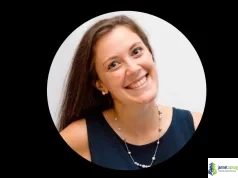
Dr Susanne Bornelöv is a leader in Computational Genomics Gene Regulation Deep Learning, focusing on the sophisticated molecular mechanisms that control protein production. Her group uses advanced AI, omics data analysis, and comparative genomics to unravel how higher layers of information, such as codon usage bias, contribute to gene regulation and genome organization. A key area of her research is developing deep learning models to simulate and predict gene-regulatory processes, enabling the in-silico design of new regulatory elements. This work is fundamental to understanding protein homeostasis and evolutionary mechanisms.
Dr. Susanne Bornelöv | Research Group Leader | Computational Genomics Gene Regulation Deep Learning

Quick Profile Summary
| Detail | Content |
|---|---|
| Position | Research Group Leader / Principal Investigator |
| Affiliation | University of Cambridge | Department of Biochemistry |
| Key Background | Expertise in integrating large-scale omics data with machine learning for biological discovery. |
| Specialization | Computational Genomics, Transcriptional & Posttranscriptional Regulation, Systems Biology |
| Core Focus | Codon optimality-mediated mRNA decay, tRNA-codon co-evolution, deep learning for gene-regulatory modeling. |
Introduction and Research Niche
The Bornelöv Group studies gene regulation at a fundamental level, utilizing cutting-edge methods in Computational Genomics Gene Regulation Deep Learning. Gene regulation—the process by which cells control gene activation to produce proteins—is a tightly controlled system involving layers of information beyond simple DNA sequence. Dr. Bornelöv’s pioneering work investigates these higher layers of information, such as codon usage, to understand their profound impact on cellular physiology and evolution.

Join our Telegram Channel for Instant Scholarship Updates
By integrating ribosome profiling data, artificial intelligence, and comparative genomics, the lab aims to build predictive in-silico systems that model the underlying principles of gene expression and protein production. This interdisciplinary approach is critical for elucidating novel posttranscriptional regulatory mechanisms.
Graduate Research Opportunities (For Prospective Applicants)
The Bornelöv Group is actively seeking highly skilled and motivated applicants across all levels (undergraduate, postgraduate, and postdoctoral) with strong backgrounds in computational science, statistics, or genomics. Research opportunities are available within three core streams:
1. Research Stream: Modeling Gene Regulation with Deep Learning
This stream is focused on the application and development of advanced AI models to predict and understand biological mechanisms.
- Topics: Using deep learning to model complex gene-regulatory processes and create robust in-silico systems. Opportunities include contributing to community-wide efforts to optimize sequence-based models of gene regulation. The ultimate goal is to enable the rational design of new regulatory elements and predict gene expression outcomes based on sequence features.
2. Research Stream: Codon Optimality and Translational Control
This stream investigates the evolutionary and mechanistic basis of posttranscriptional control mediated by translational kinetics.
- Topics: Identifying mechanisms for codon optimality-mediated mRNA decay and other novel posttranscriptional gene regulation pathways. Understanding how tRNAs and codon usage bias co-evolve across species (e.g., using Drosophila) to maintain protein homeostasis. Analyzing single-codon resolution data (like ribosome profiling) to map ribosome occupancy and translational efficiency.
3. Interdisciplinary Focus: Comparative Genomics of Regulatory RNAs
This stream uses comparative genomics to identify conserved regulatory mechanisms, particularly focusing on small non-coding RNAs.
- Topics: Studying the evolutionarily conserved mechanisms of regulatory RNAs, such as piRNAs (PIWI-interacting RNAs), to suppress endogenous retroviruses across species (e.g., the Drosophila genus). Analyzing conserved sequence features, like the stop codon enrichment at the $5’$ ends of piRNAs in mammals, to elucidate their role in genome defense and stability. This work often involves collaboration with experimental groups.
Key Awards and Professional Roles
Note: Specific award details were not provided, but roles are inferred from the publication record (e.g., senior author status) and group leader position.
| Detail | Role / Status | Institution / Body |
|---|---|---|
| Principal Investigator | Head of Bornelöv Group | University of Cambridge |
| Co-Senior Author | Leading contributor to high-impact computational genomics studies | Nature Communications, Molecular Cell |
| Community Contributor | Active participant in collaborative challenges (e.g., DREAM Consortium) | Global Computational Biology Community |
| Expertise | Expert in computational analysis of translational regulation and RNA biology | Specialist Field |
Selected Publications
Journal Article (2024): ‘A community effort to optimize sequence-based deep learning models of gene regulation’. Nature Biotechnology.
Journal Article (2023): ‘Unistrand piRNA clusters are an evolutionarily conserved mechanism to suppress endogenous retroviruses across the Drosophila genus’. Nature Communications 14:7337.
Journal Article (2022): ‘An evolutionarily conserved stop codon enrichment at the $5’$ ends of mammalian piRNAs’. Nature Communications 13:2118.
Journal Article (2021): ‘Sequence- and structure-specific cytosine-5 mRNA methylation by NSUN6’. Nucleic Acids Research 49:2:1006-1022.
Journal Article (2019): ‘Codon usage optimization in pluripotent embryonic stem cells’. Genome Biology 20:1:119.
Contact Information
Prospective students interested in supervision should reach out via the following channels:
| Detail | Content |
|---|---|
| Email Address
Bluesky |
smb208@cam.ac.uk |
| Location | Sanger Building, Cambridge |
| University Profile Page
Research Group Website |
Cambridge Profile |
Supervisory Ethos
Dr Bornelöv’s supervisory ethos is centered on rigorous quantitative analysis and computational fluency. She aims to train researchers who can independently formulate hypotheses and execute complex data analyses to answer deep biological questions. The lab culture is collaborative and intellectually stimulating, emphasizing the development of strong programming and statistical skills alongside a solid foundation in molecular biology. She seeks candidates who possess both computational proficiency and a genuine curiosity about the fundamental principles of Computational Genomics Gene Regulation Deep Learning. Success in the group requires not just running algorithms, but critically interpreting the biological meaning of the results.
Frequently Asked Questions (FAQ)
1. What is the main research area of the Bornelöv Group?
The main focus is Computational Genomics Gene Regulation Deep Learning, specifically investigating how gene expression is controlled, particularly at the posttranscriptional level, using advanced data science and machine learning.
2. Is this position more focused on biology or computation?
The position sits exactly at the interface. While the research questions are fundamentally biological (gene regulation, evolution), the methodologies used are heavily computational, requiring expertise in programming, statistics, and deep learning.
3. What is the role of ‘codon usage bias’ in the lab’s research?
Codon usage bias is a key research area. The lab studies how the preference for certain codons (synonymous but non-random) affects translation speed, protein folding, and even the stability and decay of mRNA, linking it directly to posttranscriptional gene regulation.
4. Which computational skills are necessary to join the lab?
A strong foundation in at least one scientific programming language (Python or R) is essential. Experience with machine learning frameworks (TensorFlow/PyTorch), cloud computing, and large-scale omics data processing is highly advantageous.
5. Which organisms are used as model systems?
The lab primarily uses computational models applied to human and mammalian data. However, fruit flies (Drosophila) are also used as a key comparative model for evolutionary genomics and studying mechanisms like piRNA cluster evolution.
6. What is ‘ribosome profiling data’, and how is it used?
Ribosome profiling (Ribo-seq) is a high-throughput sequencing technique that maps the location of ribosomes on mRNA transcripts at a single-codon resolution. The lab uses this data to study ribosome occupancy and translational dynamics in great detail.
7. Are there opportunities for experimental work?
The Bornelöv Group is primarily a computational lab. However, they frequently collaborate with experimental groups, offering students the chance to be involved in projects that directly generate the omics data they analyze.
8. What kind of AI models are developed in the lab?
The lab develops deep learning models, such as convolutional and recurrent neural networks, to predict complex regulatory outcomes from input sequences, aiming to create better predictive tools for gene-regulatory processes.
9. What kind of background should a prospective student have?
Ideal candidates have a Masters or strong undergraduate degree in a quantitative field (e.g., Computer Science, Statistics, Physics) and a demonstrated interest in Computational Genomics. Candidates with a strong Biology background and established coding skills are also encouraged to apply.
10. What is the scope of the projects offered?
Projects range from fundamental molecular mechanism discovery (e.g., how tRNA and codon usage co-evolve) to applied data science (e.g., optimizing deep learning models for regulatory prediction), all contributing to the core theme of Computational Genomics Gene Regulation Deep Learning.