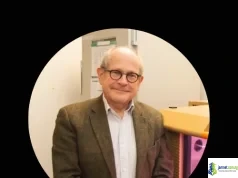
Dr. Marc de la Roche leads research centered on the Wnt Pathway Signaling in Colon Cancer, exploring its dual role in maintaining normal intestinal epithelial homeostasis and driving oncogenesis. His lab focuses on the common APC mutations that initiate colon tumors, comparing normal Wnt signaling with its pathological, oncogenic form. The core methodology involves using sophisticated intestinal organoid models to manipulate molecular circuitry, enabling the identification of vulnerabilities and the validation of potential therapeutic targets, such as the recently developed immunotherapeutics against LGR5. The ultimate goal is to define whether the oncogenic Wnt pathway is a druggable target and find ways to enforce normal cell organization and prevent cancer development.
Dr. Marc de la Roche: Research Group Leader | Wnt Pathway Signaling in Colon Cancer

Quick Profile Summary
| Detail | Content |
|---|---|
| Position | Research Group Leader / Principal Investigator |
| Affiliation | University of Cambridge, Sanger Building |
| Key Background | Molecular Biology, Cell Signaling, Cancer Genetics |
| Specialization | Wnt Signaling Pathway Regulation and Dysfunction |
| Core Focus | Identifying and modulating molecular circuitry within the intestinal epithelia to prevent the acquisition and development of colon cancer. |
Introduction and Research Niche
The de la Roche Group investigates the powerful Wnt pathway signaling in colon cancer and normal tissue maintenance. The Wnt pathway is a pivotal intracellular network that dictates stem cell multipotency, ensuring the constant renewal and ordered structure of the vast intestinal lining. When key tumor suppressor genes like APC (Adenomatous Polyposis Coli) are mutated—a common initiating event in colon cancer—the Wnt pathway becomes hyperactive, leading to spurious cell outgrowths (tumors).

Join our Telegram Channel for Instant Scholarship Updates
Dr. de la Roche’s research uses cutting-edge, patient-relevant intestinal organoid models (“mini-guts”) to precisely mimic this process. These 3D cultures allow the team to introduce and remove specific oncogenic mutations, providing a unique platform to dissect the molecular mechanisms of tumor initiation and progression. The lab’s mission is fundamentally translational: to enforce normal intestinal epithelial homeostasis and find novel ways to prevent both tumor formation and cancer development.
Graduate Research Opportunities (For Prospective Applicants)
The de la Roche Group invites motivated students interested in cancer signaling, stem cell biology, and translational research. Research opportunities are available across three main, interconnected streams:
1. Research Stream: Mechanisms of Intestinal Vulnerability to Wnt Pathway Signaling in Colon Cancer
This stream investigates the foundational biology of tumor initiation and seeks to determine why the intestinal epithelia is particularly vulnerable to oncogenic mutations in the tumor suppressor APC.
- Topics: Studying the consequences of mutational inactivation of APC on cellular organization and polarity. Defining the interaction partners (e.g., LEF1, B9L) that shield key Wnt components like $\beta$-catenin from inactivation. Analyzing the structural and functional requirements for $\beta$-catenin inhibitors.
2. Research Stream: Therapeutic Target Validation in Organoid Models
This stream focuses on using the organoid platform to validate new drug targets and therapeutic strategies.
- Topics: Defining whether the oncogenic form of the Wnt pathway is a bona fide therapeutic target in colon cancer by testing novel inhibitors (e.g., Tankyrase inhibitors or compounds like carnosic acid). Developing and testing novel immunotherapeutics, such as those targeting the stem cell marker LGR5, against multiple cancer types derived from Wnt hyperactivity.
3. Interdisciplinary Focus: Molecular and Clinical Patient Stratification
This stream bridges molecular mechanisms with patient data to enable personalized oncology.
- Topics: Conducting the molecular and clinical characterization of a subset of colon cancer stratified by specific mutations in TCF7L2. This involves deep molecular phenotyping of organoids derived from these patient subgroups to link specific genetic changes to unique signaling vulnerabilities that can be therapeutically exploited.
Key Awards and Professional Roles
Note: Specific award details were not provided, but roles are inferred from publication history and group leader position.
| Detail | Role / Status | Institution / Body |
|---|---|---|
| Principal Investigator | Head of de la Roche Group | University of Cambridge |
| Expertise | Leading translational Wnt Signaling Biologist | Cancer Research Community |
| Methodology Focus | Expert in Intestinal Organoid Culture and Manipulation | Cell Culture/Model Systems |
| Translational Goal | Focus on developing novel immunotherapeutics | Molecular Medicine & Oncology |
Selected Publications
Journal Article (2024): “Novel immunotherapeutics against LGR5 to target multiple cancer types.” EMBO Mol Med.
Journal Article (2022): “Cell-autonomous Hedgehog signaling controls Th17 polarization and pathogenicity.” Nat. Comms.
Journal Article (2021): “Mutational inactivation of Apc in the intestinal epithelia compromises cellular organisation.” J. Cell Sci.
Journal Article (2019): “Organoid culture media containing growth factors of defined cellular activity.” Scientific Reports.
Journal Article (2014): “LEF1 and B9L shield $\beta$-catenin from inactivation by axin, desensitizing colorectal cancer cells to tankyrase inhibitors.” Cancer Res.
Journal Article (2012): “An intrinsically labile $\alpha$-helix abutting the BCL9-binding site of beta-catenin is required for its inhibition by carnosic acid.” Nat. Commun.
Contact Information
Prospective students interested in supervision should reach out via the following channels:
| Detail | Content |
|---|---|
| Email Address | mad58@cam.ac.uk |
| Marc de la Roche | |
| University Profile Page
Research Group Website |
De la Roche |
Supervisory Ethos
Dr. de la Roche’s lab is a highly collaborative and supportive environment that sits at the cutting edge of cancer and stem cell biology. Supervision emphasizes rigorous experimental design, strong proficiency in mammalian cell culture (especially organoids), and critical data analysis. He seeks candidates who are self-driven, possess a genuine curiosity about fundamental cell signaling, and are excited by the translational potential of their work. The ethos encourages independence and collaboration, ensuring researchers develop into highly skilled scientists capable of tackling complex problems in Wnt Pathway Signaling in Colon Cancer and beyond. The group is welcoming to interns, undergraduates, postgraduates, and postdocs alike.
Frequently Asked Questions (FAQ)
1. What is the Wnt pathway and why is it important in cancer?
The Wnt pathway is a crucial cell signaling cascade that controls cell proliferation, differentiation, and stem cell maintenance. In cancer, particularly colon cancer, the Wnt pathway is frequently mutated (often in APC) and becomes constitutively active, driving uncontrolled cell growth and tumor formation.
2. What are intestinal organoids and why does the lab use them?
Intestinal organoids are 3D miniature versions of the gut lining grown in vitro. They perfectly mimic the cellular organization and function of the intestinal epithelia, allowing the lab to study disease and test therapeutics in a highly relevant, genetically manipulable model system that bridges the gap between 2D cell lines and in vivo studies.
3. What specific molecular event triggers colon cancer in this model?
A key event studied is the loss or inactivation of the APC tumor suppressor protein. This leads to the stabilization and nuclear accumulation of $\beta$-catenin, which then drives the transcription of pro-cancer genes.
4. Is the lab focused on basic science or translational research?
The lab operates at the interface of both. It performs fundamental basic science (e.g., determining protein-protein interactions and defining molecular circuitry) with a clear translational goal of identifying druggable targets for colon cancer.
5. What techniques would I learn as a student in this lab?
You would gain expertise in 3D intestinal organoid culture, advanced molecular biology techniques (CRISPR-Cas9 gene editing, cloning), protein biochemistry, cell imaging, and bioinformatics for analyzing genomic data.
6. Does the lab only study colon cancer?
While the primary model is the intestinal epithelia, the Wnt pathway is involved in many processes. Recent work has extended to looking at Wnt-regulated targets (like LGR5) in multiple cancer types and exploring other signaling pathways (like Hedgehog) that interact with the Wnt network.
7. How is the research relevant to immunotherapy?
The lab is involved in identifying novel surface markers, such as LGR5, that are specific to Wnt-driven cancer cells. These can be targeted using immunotherapeutics (like antibodies) to selectively destroy cancer stem cells while sparing healthy tissue.
8. What is TCF7L2 and why is it a research objective?
TCF7L2 (formerly TCF4) is a transcription factor that forms the nuclear complex with beta-catenin, translating the Wnt signal into gene expression. Studying specific mutations in TCF7L2 helps stratify colon cancer patients into distinct subgroups, potentially leading to personalized treatment plans.
9. What kind of background is ideal for a PhD candidate?
The ideal candidate has a strong undergraduate or master’s background in Cell Biology, Molecular Genetics, or Biochemistry, with laboratory experience in mammalian cell culture or cloning being highly beneficial.
10. What is the lab culture like?
The lab is housed in the Sanger Building in Cambridge, offering a supportive, dynamic, and intellectually stimulating environment. Dr. de la Roche fosters a culture of curiosity, intellectual rigor, and open discussion, promoting rapid development for all researchers.