Defending democratic systems from modern online threats is a major milestone for technology innovators and policy advocates looking to protect human rights. For many brilliant developers and civil society leaders, finding the resources to build functional prototypes and travel to international policy centers remains a persistent struggle. Navigating the competitive space of ethical technology funding is often difficult because it is tough to find a platform that provides complete travel coverage alongside direct mentorship from world class academic institutions.
Join our Telegram Channel for Instant Scholarship Updates
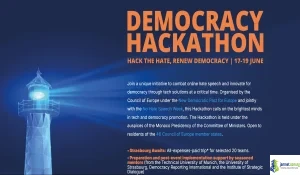
The 2026 Democracy Hackathon, organized by the Council of Europe in Strasbourg, France, is a premier international innovation event designed to solve these professional hurdles. By providing a fully funded travel and accommodation package to Strasbourg and the chance to compete for a fifty thousand Euro Microsoft grant, this hackathon ensures that multidisciplinary teams can focus entirely on hacking the hate and renewing democratic values across Europe without financial worry.
Democracy Hackathon Summary Table
| Detail | Value |
|---|---|
| Host Organization | Council of Europe |
| Target Audience | Multidisciplinary Teams of Tech and Policy Innovators |
| Primary Benefit | Fully Funded Strasbourg Trip and £50,000 Grant |
| Program Type | International Tech for Democracy Hackathon |
| Gender Focus | All Genders Welcome (Gender Balanced Teams Encouraged) |
| Application Deadline | June 5 2026 |
About the Initiative 2026
The Democracy Hackathon is far more than a basic coding competition; it serves as a prestigious launchpad for digital democracy advocacy and human rights hackathons. Held at the Palais de l’Europe under the auspices of the Monaco Presidency of the Committee of Ministers, the event brings together some of the brightest minds in AI ethics, software engineering, and political science. This strategic initiative is an integral part of the New Democratic Pact for Europe, a broader political project aimed at addressing democratic backsliding. Participants will collaborate in real time to build ethical, human rights centered digital solutions that combat coordinated harassment, disinformation, and online polarization.
Core Objectives of the Program
- To support young innovators by providing high value ethical technology funding and professional mentoring.
- To advance global online hate mitigation by developing privacy preserving detection tools.
- To foster inclusive digital governance by connecting grassroots developers with European policymakers.
Benefits of the 2026 Democracy Hackathon
- Complete travel coverage and fully funded return flights to Strasbourg, France.
- Full hotel accommodation and meals provided for the duration of the event from June 17 to June 19 2026.
- Opportunity to compete for a share of the fifty thousand Euro Microsoft development grant.
- Strategic hands on mentorship from leading researchers at the Technical University of Munich and the University of Strasbourg.
- Direct networking with prominent policy organizations, including Democracy Reporting International and the Institute for Strategic Dialogue.
- Comprehensive post event mentoring and incubation support to help implement your winning prototype in the real world.
- Outstanding global visibility for your project through official Council of Europe media channels.
Eligibility and Team Requirements
To ensure high impact solutions, the Council of Europe seeks diverse, multidisciplinary teams that meet the following criteria:
- Team Composition: Teams must consist of three to four members, representing a balanced mix of technical and social science skills.
- Key Roles Required:
- Technologist or Backend Developer: Responsible for natural language processing tools, AI systems, and technical implementation.
- Democracy or Policy Expert: Providing ethical guidance, human rights alignment, and governance insights.
- Designer or User Interface Innovator: Managing user experience, accessibility, and clean data visualizations.
- Thematic Alignment: Projects must address one of the four official challenges, focusing on data privacy, hate speech detection, or institutional support.
- Output Commitment: Teams must be ready to develop a working prototype, wireframes, or a detailed research note during the event.
- Diversity and Inclusion: The program highly prioritizes gender balanced teams and encourages applications from underrepresented tech communities.
The Four Official Challenge Tracks
Teams must select one primary track to focus their development efforts:
- Privacy Preserving Hate Speech Detection (PrivHSD): Guided by the Technical University of Munich, focusing on building detection tools that protect user anonymity and prevent harmful surveillance.
- Coordinated Inauthentic Behaviour Identification: Guided by the Institute for Strategic Dialogue, focusing on mapping cross platform hate narratives and tracking gendered harassment campaigns.
- Reporting and Response Systems for Online Hate: Guided by Democracy Reporting International, focusing on transforming user reports into structured evidence for electoral commissions.
- Think Out of the Box: Guided by the University of Strasbourg, focusing on educational tools and creative social impact platforms that promote empathy and community empowerment.
Step by Step Application Guide for the Hackathon
Phase 1: Team Formation and Skill Mapping
- Assemble a cohesive team of three to four members with diverse backgrounds in coding, policy, and design.
- Ensure your team includes a dedicated backend developer, a policy expert, and a user interface designer.
- Review the four challenge tracks to identify which area matches your collective expertise.
- Confirm that all team members are fully available to travel to Strasbourg, France, from June 17 to June 19 2026.
Phase 2: Preparing Your Concept Proposal
- Collaborate with your team to draft a concise, two page concept summary.
- Outline a clear problem statement, your proposed technical solution, and its expected impact.
- Explicitly detail how your system will protect user privacy and respect fundamental human rights.
- Save your completed two page proposal as a professional PDF document.
Phase 3: Updating Portfolios and Resumes
- Update your Curriculum Vitae to highlight your experience in AI ethics, software engineering, or public policy.
- Tech leads should ensure their GitHub profiles demonstrate clean, functional code and active collaboration.
- Designers should compile a brief portfolio showing their user experience and data visualization layouts.
- Save all team resumes as separate, high quality PDF files.
Phase 4: Submitting Through the Council of Europe Portal
- Access the official Democracy Hackathon 2026 application platform online.
- Fill out the registration form with your team name, contact details, and country of origin.
- Upload your two page concept summary, team resumes, and technical portfolios in the designated fields.
- Submit your completed application package before the absolute deadline on June 5 2026.
Phase 5: Warm Up Session and Travel Logistics
- Save a digital confirmation of your submitted application and write down your project registration numbers.
- Monitor your team’s primary email inbox for selection notifications.
- If selected, participate in the mandatory virtual warm up session to refine your ideas with assigned mentors.
- Coordinate with the Council of Europe secretariat to secure your travel tickets, visa support letters, and Strasbourg lodging.
Jamnet Expert Advice (STAR/SMART Methods)
- Use the SMART Method: Be Specific about the hate speech patterns you want to detect, ensure your system accuracy is Measurable, and keep your solutions Relevant to European human rights standards.
- Apply the STAR Technique: In your two page proposal and virtual interviews, describe a challenging online harassment Situation, the Task your team set out to resolve, the Action you will execute during the hackathon, and the positive Result.
- Emphasis: Focus heavily on showing how your technology preserves data privacy and avoids creating new surveillance risks for vulnerable users.
- Proactive Tip: Submit your application early in May, as the selection committee reviews concepts as they arrive and late submissions are strictly not considered.
Deadline: June 5 2026
CLICK HERE TO APPLY
Frequently Asked Questions (FAQ) About the Hackathon
- Where will the live hackathon take place? The event is hosted in Strasbourg, France, at the Palais de l’Europe.
- What are the dates of the event? The live hackathon runs from June 17 to June 19 2026.
- Is travel and housing covered? Yes the Council of Europe provides a fully funded travel and accommodation package for selected teams.
- What is the value of the grant prize? Winning teams will share a fifty thousand Euro development grant sponsored by Microsoft.
- What is the team size limit? Teams must consist of three to four active members with diverse technical and policy skills.
- What are the core challenge tracks? Privacy Preserving Detection, Coordinated Inauthentic Behaviour, Reporting Systems, and Out of the Box Solutions.
- Can individuals apply? No applicants must apply as part of a pre formed team of three to four members.
- Is there an application fee? No participating in the Democracy Hackathon is completely free of charge.
- Which academic institutions support this event? Technical University of Munich, University of Strasbourg, Democracy Reporting International, and the Institute for Strategic Dialogue.
- When is the final application deadline? All team applications must be submitted through the portal before June 5 2026.