The Goethe Institut, through the EU-funded “Africa-Europe Partnerships for Culture Southern Africa” project, is offering grants of up to €55,000 to non-profit organizations in Botswana, Eswatini, Lesotho, Namibia, South Africa, and Zimbabwe. The initiative focuses on the co-creation of new heritage narratives by establishing “Narrative Clusters” where NGOs collaborate with interdisciplinary artists. Organizations must manage a tangible or intangible heritage site/practice and have at least two years of operational experience. Proposals will be evaluated on thematic relevance, organizational capacity, and community outreach. The application deadline is February 13, 2026, with submissions required via the Goethe-Institut’s GAP portal.
Goethe Institut Co-Creation Grants 2026 for Southern Africa Summary Table
| Detail | Value |
|---|---|
| Host Institution | Goethe-Institut |
| Funding Body | European Union (EU) |
| Eligible Countries | Botswana, Eswatini, Lesotho, Namibia, South Africa, Zimbabwe |
| Reward | Up to €55,000 per organization |
| Target Group | Non-profit, Non-governmental Organizations (NGOs) |
| Project Focus | Co-creation of New Heritage Narratives |
| Application Deadline | February 13, 2026 |
Goethe Institut Co-Creation Grants 2026 for Southern Africa Details
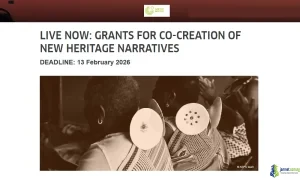
The Goethe-Institut invites applications for the “Grants for Co-Creation of New Heritage Narratives 2026″ under the regional project “Africa-Europe Partnerships for Culture: Southern Africa.” This initiative is designed to empower local organizations to lead “Narrative Clusters”—interdisciplinary hubs where artists and heritage experts collaborate to redefine how history and culture are perceived and shared in the 21st century.

Join our Telegram Channel for Instant Scholarship Updates
Scholarship Details
This grant program aims to move beyond traditional museum-style displays to create innovative, contemporary stories around tangible and intangible heritage. At least eight organizations will be selected to receive substantial financial support to coordinate artists, host development retreats, and present their findings to the public. This program bridges the gap between regional cultural production and international dialogue.
Benefits of the Goethe Institut Co-Creation Grants 2026 for Southern Africa
The financial support is structured to cover all aspects of project management and creative development.
Tier 1: Narrative Cluster Management Grant (Up to €55,000)
- Production & Co-creation Funding: Direct financial support for materials, equipment hire, and production costs associated with developing new heritage stories.
- Staff & Admin Costs: Coverage for personnel involved in managing the Narrative Cluster and coordinating the interdisciplinary teams.
Tier 2: Operational & Logistical Support
- Retreats & Workshops: Funding for the organization of development retreats and local presentations.
- Travel & Accommodation: Compensation for travel and lodging costs for participating artists and project coordinators.
Tier 3: Accessibility & Sustainability Enhancements
- Inclusion Funding: Specific budget allocations for adaptations for persons with disabilities to ensure accessibility.
- Environmental Sustainability: Costs related to implementing green practices during events and project execution.
Eligibility Requirements for the Goethe Institut Co-Creation Grants 2026 for Southern Africa
- Academic/Leadership: The applicant must be a legally registered non-profit, non-governmental entity with a demonstrated track record of at least two years in heritage-related activities.
- Study Status: This is an organizational grant; individual students are not eligible to apply as lead applicants.
- Visa Status/Residency: Organizations must be registered and operational in Botswana, Eswatini, Lesotho, Namibia, South Africa, or Zimbabwe.
- Program Admission: The organization must manage a tangible heritage site (e.g., historical buildings) or an intangible heritage practice (e.g., music, folklore). Preference is given to lesser-known sites outside major urban centers.
How to Apply for the Goethe Institut Co-Creation Grants 2026 for Southern Africa (step by step)
- Apply for Program: Register on the Goethe-Institut’s GAP (Grant Application Portal) and select the Southern Africa Heritage call.
- Automatic Evaluation: Ensure all mandatory registration documents (proving 2+ years of operation) are uploaded for initial compliance checks.
- Eligibility Assessment: Submit a detailed proposal outlining your heritage site/practice and the “Narrative Cluster” concept, using the mandatory budget template provided on GAP.
- Notification of Award: Applications will be reviewed by a committee based on thematic approach (30%), capacity (15%), facilities (20%), and outreach (15%). Selected organizations will be notified of the grant award and disbursement milestones.
Application Deadline: February 13, 2026
CLICK HERE TO APPLY
Frequently Asked Questions (FAQ)
1. Which countries are eligible for the Goethe-Institut grant?
Non-profit organizations based in Botswana, Eswatini, Lesotho, Namibia, South Africa, and Zimbabwe are eligible.
2. Can an individual artist apply for the €55,000 grant?
No, the grant is exclusively for registered non-profit, non-governmental organizations. Individual artists can participate as part of the Narrative Clusters formed by these organizations.
3. What is the maximum funding amount available?
Each selected organization can apply for a grant of up to €55,000, based on their specific submitted budget.
4. What kind of heritage sites are eligible?
The grant covers both tangible heritage (archaeological sites, historical buildings) and intangible heritage (folklore, traditional crafts, music, etc.).
5. Is preference given to specific locations?
Yes, preference is given to organizations representing lesser-known heritage sites or practices, particularly those located outside major urban centers.
6. Can I use my own budget template?
No, applicants must use the official budget template provided on the GAP portal. No other templates will be accepted.
7. How will the grants be paid?
Grants are disbursed in installments, subject to achieving specific project milestones and passing financial reviews.
8. What is a “Narrative Cluster”?
It is a collaborative group led by the grantee organization, involving interdisciplinary artists and creatives who work together to develop new stories about a specific heritage.
9. Does the organization need to own the facilities for workshops?
No, the organization must have access to adequate facilities, but it is not mandatory that they own the property.
10. When is the deadline for the 2026 cycle?
The final deadline for proposal submission is February 13, 2026.