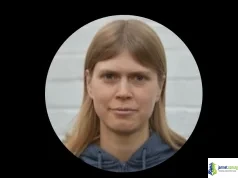
Dr. Tony Jackson’s group investigates Voltage-Gated Sodium Channels (Nav), the plasma membrane proteins essential for initiating the action potential in electrically-excitable cells. The research focuses on the beta-subunits, particularly beta3, which modulate channel electrophysiology and are implicated in diseases like cardiac arrhythmias. Mechanistic studies use a powerful mix of electrophysiology, site-directed mutagenesis, unnatural amino-acid technology, and single-chain antibody technology to understand the structure/function relationship of the channel complex.
A major technological contribution from the lab is the development of SPPLAT (Selective Proteomic Proximity Labeling Assay Using Tyramide), a quantitative proximity proteomics method. The group uses SPPLAT to determine the molecular organization and clustering of Nav channels—such as the heart-specific Nav1.5 and the pain-sensing Na_v1.7 and their molecular near-neighbours in both health and disease states.
Dr. Tony Jackson: Group Leader | Voltage-Gated Sodium Channels and Proximity Proteomics

Introduction and Research Niche
Dr. Tony Jackson’s group is a leader in the field of Voltage-Gated Sodium Channels (Nav), essential plasma membrane proteins that dictate excitability in nerve, muscle, and heart cells. These channels are critical pharmacological targets for diseases ranging from chronic pain and epilepsy to cardiac arrhythmias.

Join our Telegram Channel for Instant Scholarship Updates
The research aims to gain a detailed, mechanistic understanding of the $Na_v$ channel complex, focusing particularly on how auxiliary beta-subunits modulate channel function and how the channels organize themselves into spatially-restricted complexes within the plasma membrane. The lab combines cutting-edge biophysics and protein engineering with innovative, custom-developed proximity labeling technologies, creating a truly collaborative and interdisciplinary research environment.
Graduate Research Opportunities
The Jackson Group offers exciting projects that combine molecular biology, functional biophysics, and next-generation proteomics, organized around these three main research objectives:
1. Research Stream: $\beta$-Subunit Regulation of Voltage-Gated Sodium Channels
This core stream focuses on the structural and functional mechanisms by which the auxiliary beta-subunits modulate the electrophysiological behavior of the main alpha$-subunit. This has direct relevance to disease pathogenesis.
- Topics: Conducting rigorous structure/function studies on Nav channels, with specific emphasis on the beta3-subunit, whose deletion is linked to cardiac arrhythmias. Projects utilize electrophysiology (patch-clamp techniques), site-directed mutagenesis, and the incorporation of unnatural amino-acid technology to probe channel gating control and key protein-protein interaction interfaces with high precision.
2. Research Stream: Molecular Organization and Clustering in Disease
This stream focuses on the critical, but often overlooked, phenomenon of $Na_v$ channel clustering in the plasma membrane, which has profound functional consequences in excitable cells.
- Topics: Determining the precise molecular organization of Nav channels in neuronal and cardiomyocyte plasma membranes, comparing healthy versus disease states. In collaboration with clinical and proteomic partners, students will use SPPLAT (Selective Proteomic Proximity Labeling Assay Using Tyramide) to map the near-neighbours of clinically important channels like the heart-specific $Na_v1.5$ and the pain-sensing Nav1.7 to understand the disease-relevant protein clusters.
3. Interdisciplinary Focus: Selective Proteomic Proximity Labeling Assay Using Tyramide (SPPLAT)
The group is dedicated to applying and further developing its innovative quantitative proteomic technique, SPPLAT, which has wide applications across the biomolecular sciences for mapping localized membrane-bound protein clusters.
- Topics: Developing novel immunological reagents (like single-chain antibodies) for precise targeting and use with Nav channels. Students will optimize and apply SPPLAT technology to study other challenging membrane protein clusters beyond Nav channels, such as receptors involved in immune signaling, and refine the quantitative analysis of the resulting proteomic data.
Key Awards and Professional Roles
| Detail | Role / Status | Institution / Body |
|---|---|---|
| Core Discipline | Membrane Protein Biophysics | University of Cambridge Biochemistry |
| Key Methodology | Quantitative Proximity Proteomics (SPPLAT) | Proteomic and Biophysical Innovation |
| Disease Relevance | Cardiac Arrhythmia and Chronic Pain | Biomedical and Translational Science |
| Technological Expertise | Unnatural Amino Acid Technology | Advanced Protein Engineering |
Selected Publications
Journal Article (2020): “Supramolecular clustering of the cardiac sodium channel $Na_v1.5$ in HEK293F cells, with and without the auxiliary $\beta_3$-subunit.” FASEB J.
Journal Article (2019): “Gating control of the cardiac sodium channel $Na_v1.5$ by its $\beta_3$-subunit involves distinct roles for a transmembrane glutamic acid and the extracellular domain.” J. Biol. Chem.
Protocol Article (2017): “Selective Proteomic Proximity Labeling Assay Using Tyramide (SPPLAT): a quantitative method for the proteomic analysis of localized membrane-bound protein clusters.” Curr. Protoc. Protein Sci.
Journal Article (2014): “New insights into the DT40 B cell receptor cluster using a proteomic proximity labeling assay.” J. Biol. Chem.
Journal Article (2014): “Crystal structure and molecular imaging of the $Na_v$ channel $\beta_3$ subunit indicates a trimeric assembly.” J. Biol. Chem.
Contact Information
Prospective students interested in supervision should reach out via the following channels:
| Detail | Content |
|---|---|
| Email Address | apj1000@cam.ac.uk (Inferred standard university format) |
| University Profile Page | [Link to official University faculty page] |
Supervisory Ethos
Dr. Jackson fosters a dynamic and technically advanced research environment. He emphasizes the importance of rigorous experimental design and the necessity of applying multiple techniques—from molecular biology and engineering to biophysics and computation—to solve complex biological problems. Mentorship is focused on transforming students into independent, technically proficient ion channel biologists who are ready to bridge the gap between fundamental molecular mechanisms and translational medicine. He seeks highly motivated candidates with strong analytical skills and a background in Biochemistry, Biophysics, or Molecular Biology who are excited by the challenge of studying membrane proteins and developing novel methodologies.
Frequently Asked Questions (FAQ)
1. What is the key functional role of voltage-gated sodium channels ($Na_v$)?
$Na_v$ channels are responsible for the initiation of the action potential—the rapid, transient electrical signal in nerve, muscle, and heart cells. They control excitability and are thus fundamental to neurological and cardiac function.
2. What is the $\beta_3$-subunit, and why is it a research focus?
The $\beta_3$-subunit is an auxiliary subunit that physically associates with the main $\alpha$-subunit of the $Na_v$ channel. It acts as a modulator, influencing the channel’s electrophysiological properties. Dysfunction of $\beta_3$ has been linked to severe conditions, including cardiac arrhythmias.
3. What is Electrophysiology, and how is it used in the lab?
Electrophysiology (specifically patch-clamping) is a technique used to measure the electrical currents flowing through ion channels. We use it to characterize the functional consequences of mutations, $\beta$-subunit interactions, and drug application on channel gating and kinetics.
4. What is SPPLAT and how is it different from other proteomics methods?
SPPLAT (Selective Proteomic Proximity Labeling Assay Using Tyramide) is a quantitative proximity proteomics method developed in the lab. It is unique because it allows for the precise, localized identification of proteins that are very close (near-neighbors) to a target membrane protein, like $Na_v1.5$ or $Na_v1.7$, within its native plasma membrane cluster.
5. What is “channel clustering” and why is it functionally important?
Channel clustering refers to the non-random organization of $Na_v$ channels into dense, spatially-restricted complexes on the cell surface. This spatial organization is essential for maintaining the appropriate electrical excitability and signaling efficiency of the cell.
6. What are the main disease areas addressed by the group’s research?
Our research is highly relevant to chronic pain (targeting $Na_v1.7$), epilepsy, and heart disease (targeting the cardiac channel $Na_v1.5$ and its $\beta$-subunits).
7. Is a background in Physics or Chemistry suitable for this lab?
Absolutely. The lab sits at the intersection of biochemistry and biophysics. Students with strong quantitative skills in Physical Chemistry or Biophysics are highly suited for the electrophysiology and proteomics technology development streams.
8. What is Unnatural Amino Acid Technology?
This technique allows us to genetically encode non-standard amino acids into a protein (like the $Na_v$ channel) at specific positions. This provides a powerful tool to introduce unique chemical probes or modifications, enabling detailed structure/function mapping that cannot be achieved with standard mutagenesis.
9. How computational is the research?
While the core work is experimental (molecular biology and electrophysiology), there is a significant computational component in the analysis of high-throughput proteomic data (SPPLAT) and collaboration on structural modeling, making experience in computational biology valuable.
10. What kind of collaborations does the lab engage in?
The group has active international and domestic collaborations across proteomics (Lilley), biophysics (Perrett), and clinical cardiology/pain pharmacology (Huang and St-John Smith). Students will benefit from this wide network of expertise.