
Professor Alyce Mahon, Professor of Modern and Contemporary Art at the University of Cambridge and a Fellow of Trinity College, is a leading authority on Surrealism and 20th century visual culture. Her core research, encapsulated by Surrealism Body Politics Cambridge, explores the dynamic interplay between the body and the body politic across movements from Dada and Surrealism to the Sixties counter-culture and contemporary queer-feminist art. A highly active curator, she has organized major international retrospectives for figures like Dorothea Tanning and has advanced the profile of women of the avant-garde.
Professor Alyce Mahon, Professor of Modern and Contemporary Art History| Surrealism Body Politics Cambridge Supervisor
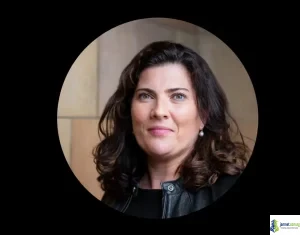
- Fellow in History of Art, Trinity College, University of Cambridge
Quick Profile Summary
| Detail | Content |
|---|---|
| Position | Professor of Modern and Contemporary Art |
| Affiliation | University of Cambridge; Fellow of Trinity College; Chevening |
| Key Background | PhD (Courtauld Institute of Art), British Academy/Leverhulme Senior Research Fellow, Distinguished Scholar (Li Ka Shing Foundation) |
| Specialization | Surrealism (1924–1969), Erotic Art, Women of the Avant-Garde, Queer-Feminist Art, The Body Politic |
| Core Focus | The dynamic between the body and the body politic in modern and contemporary art, photography, film, and exhibition practice. |
Introduction and Research Niche
Professor Alyce Mahon specializes in the history and theory of Modern and Contemporary Art, with a focus on Surrealism Body Politics Cambridge. Her influential work addresses the enduring dynamic between the body and the body politic across a vast timeline, from the inter-war avant-garde to queer-feminist practices today.

Join our Telegram Channel for Instant Scholarship Updates
Drawing on extensive archival research and feminist theory (coining the term ‘the Sadean imagination’), she investigates how artists have used the themes of desire, transgression, and the erotic to challenge restrictive societal and political regimes. Professor Mahon is also a highly active international curator, integrating her research directly into major exhibition practices at institutions such as Tate Modern, the Reina Sofia Museum, and the Centre Pompidou. Her work is dedicated to re-asserting the global impact of Surrealism and advancing the profile of women within the avant-garde.
Graduate Research Opportunities (For Prospective Students)
Professor Mahon supervises MPhil and PhD students across a range of historical and thematic aspects of Modern and Contemporary Art, reflecting her curatorial and publication specialisms. Research opportunities within her supervision fall broadly into the following three streams:
1. Research Stream: Surrealism, Eros, and the Body Politic
This stream focuses on the core history of Surrealism, examining its radical spatial practice, its global impact after World War II, and its critical engagement with gender, sexuality, and politics.
- Topics: The long history of Surrealism (1924–1969); The Sadean imagination in art and literature; Surrealist eroticism and radical political engagement; the ‘informe’ in inter-war Paris; Surrealist installation and exhibition practices (1938, 1947, 1959, 1965).
2. Research Stream: Women of the Avant-Garde and Curatorial Studies
This area focuses on re-evaluating the role and contributions of women artists within Surrealism and the wider avant-garde, often using a feminist critical perspective.
- Topics: Focused study on artists like Dorothea Tanning (and her concept of ‘ecopoetic’ surrealist perspectives), Leonor Fini, Ithell Colquhoun, Meret Oppenheim, and Maria Martins; the relationship between art and the occult; curatorial histories and the politics of display (Paper IIB focus); the development of feminist perspectives in art theory and practice.
3. Research Stream: Post-War Legacy, Counter-Culture, and Contemporary Art
This methodology-focused stream investigates the enduring legacy of Surrealism on subsequent movements, particularly in areas dealing with performance, film, and activist art.
- Topics: The impact of Surrealism on the Sixties counter-culture and Happenings (e.g., Jean-Jacques Lebel); American art and politics; modern and contemporary French/German photography; queer-feminist art practice (from punk-feminism to Moving Image Art); the expression and repression of desire and transgression in art from the Renaissance to the 21st century.
Key Awards and Professional Roles
| Year | Award / Fellowship | Institution / Body |
|---|---|---|
| 2023 | Co-Curator, SADE: Freedom or Evil | Centre de Cultura Contempoània de Barcelona |
| 2018-2019 | Curator, Dorothea Tanning Retrospective | Reina Sofia Museum / Tate Modern |
| 2017-2018 | Senior Research Fellowship | British Academy/Leverhulme |
| 2005-2007 | Research Fellow / Visiting Scholar | Columbia University (Paris) / Princeton University |
| 1996 | Gold Medal and Double First | Trinity College Dublin (Exceptional Academic Achievement) |
Selected Publications
Monograph (Forthcoming Nov. 2025): Dorothea Tanning: A Surrealist World. Yale University Press.
Monograph (2020): The Marquis de Sade and the Avant-Garde (Awarded Millard Meiss Publication Award). Princeton University Press.
Monograph (2005): Surrealism and the Politics of Eros, 1938-1968. Thames & Hudson.
Monograph (2005): Eroticism & Art. Oxford University Press (Oxford History of Art Series).
Co-Authored Book (2023): SADE: Freedom or Evil (with Antonio Monegal). CCCB.
Journal Editor (Ongoing): Co-Editor, International Journal of Surrealism (Minnesota University Press).
Contact Information
Prospective students interested in supervision should reach out via the following channels:
| Detail | Content |
|---|---|
| Email Address
|
am414@cam.ac.uk |
| University Office Phone | 01223 765132 (Trinity College)
01223 332980 (Department Office) |
| University Profile Page | Professor Alyce Mahon’s University of Cambridge Profile |
Supervisory Ethos
Professor Mahon’s supervisory ethos is defined by intellectual rigor and a commitment to applying critical theory (especially feminist and queer theory) to visual culture. She encourages candidates to undertake intensive archival research and to think dynamically about the exhibition of art. She seeks highly engaged, independent students who are keen to explore the intersections of gender, politics, and the body in art. Her expectation is for candidates to frame their research questions to challenge established narratives, particularly concerning the contributions of women artists and the enduring political relevance of movements like Surrealism, reinforcing the goals of Surrealism Body Politics Cambridge.
Frequently Asked Questions (FAQ)
1. Is Professor Mahon currently accepting new students given her sabbatical?
Yes, Professor Mahon welcomes enquiries from prospective PhD students. However, candidates must be aware she is on Sabbatical until October 2026 and supervision will formally commence after that date.
2. What is the scope of her research on Surrealism?
Her work covers the “long history” of Surrealism (1924–1969) and its later impact on contemporary art, particularly focusing on the movement’s radical use of eroticism and installation practice.
3. What does she mean by the ‘body politic’?
The ‘body politic’ refers to her examination of how the human body and issues of sexuality, desire, and transgression in art reflect, reinforce, or resist broader social, political, and regulatory structures of the state and society.
4. What non-European art does Professor Mahon focus on?
She has researched and curated exhibitions on global Surrealism, including the work of Brazilian Surrealist Maria Martins, and has given lectures on global modern art through her work with the Li Ka Shing Foundation in China.
5. What is the ‘Sadean imagination’?
This is the term Professor Mahon coined in her monograph on the Marquis de Sade, referring to the way avant-garde artists (especially Surrealists) drew on Sade’s philosophy to challenge oppressive codes of gender and sexuality.
6. Does she supervise research on photography and film?
Yes. She supervises doctoral students on modern and contemporary French and German photography, as well as Moving Image Art, film, and performance, analyzing them through the lens of body and politics.
7. Which modern female artists are central to her work?
Her key specialisms include Dorothea Tanning, Leonor Fini, and Ithell Colquhoun, among others, emphasizing her commitment to raising the profile of women in the avant-garde.
8. What kind of prior qualification is preferred for applicants?
She seeks candidates with strong academic backgrounds in Art History, Modern English, or Theory, demonstrating an ability to synthesize visual analysis with critical texts and archival material.
9. Does she only focus on $20^{th}$ century art?
While her primary specialization is Modern and Contemporary Art, her book Eroticism & Art provides a comprehensive history spanning from the Renaissance to the $21^{st}$ century, offering breadth for contextual studies.
10. What should a prospective student emphasize in their research proposal?
Candidates should clearly outline how their proposed research question engages with themes of Surrealism Body Politics Cambridge, feminist/queer theory, or the interplay between eroticism and political activism in art.


