
Dr Yu Zhang, an Assistant Professor in Architecture and Design at the University of Cambridge and a Fellow of Clare College, leads research focused on Sustainable Computational Design Cambridge. Her work uses digital technologies (AI, optimization, fabrication-aware design) to create sustainable (re)generative structures across the Architecture, Engineering, and Construction (AEC) industry. With a multidisciplinary background from MIT and ETH Zurich, her objective is to establish an interactive design framework that meticulously assesses the ecological, economic, and social sustainability of structures throughout their life cycle.
Dr Yu Zhang, Assistant Professor in Architecture and Design: Sustainable Computational Design Cambridge Supervisor
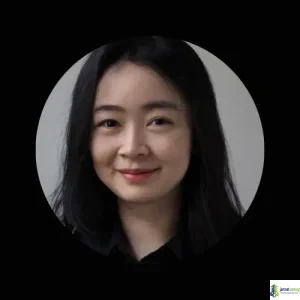
- Fellow of Clare College, University of Cambridge
Quick Profile Summary
| Detail | Content |
|---|---|
| Position | Assistant Professor in Architecture and Design |
| Affiliation | University of Cambridge; Fellow of Clare College |
| Interdisciplinary Roles | Structural Engineering, Architecture, Mechanical Engineering, Computer Science |
| Key Background | Postdoctoral Researcher (ETH Zurich), M.Sc. (MIT), Ph.D. (ETH Zurich), MDO Team (Disney Research) |
| Specialization | Computational Generative Design, Structural Optimization, Digital Fabrication, Sustainable Structures |
| Core Ambition | Driving the building sector towards a net-zero future using innovative, cutting-edge technologies. |
Introduction and Research Niche
Dr. Yu Zhang is an Assistant Professor in Architecture and Design whose research is dedicated to exploring and implementing Sustainable Computational Design Cambridge solutions to transform the Architecture, Engineering, and Construction (AEC) industry. She sits at a critical interdisciplinary intersection, leveraging her background in structural engineering, architecture, and computer science (MIT, ETH Zurich, Disney Research) to drive the sector toward a net-zero and regenerative future.

Join our Telegram Channel for Instant Scholarship Updates
Her core work focuses on developing comprehensive, interactive design frameworks that employ digital technologies—such as structural optimization, AI-enhanced generative design, and digital fabrication—to assess and improve the ecological, economic, and social sustainability of structures across their entire life cycle.
Graduate Research Opportunities (For Prospective Students)
Dr. Zhang welcomes highly motivated PhD and MPhil candidates across disciplines (Architecture, Engineering, Computer Science, Mathematics) interested in applying computational rigor to complex sustainability challenges. Research within her group aims to define the next generation of high-performance, green structures, focusing heavily on Sustainable Computational Design Cambridge.
1. Research Stream: AI and Optimization for Regenerative Structures
This stream focuses on developing and implementing advanced computational methodologies to design innovative structural systems that are both high-performing and sustainable.
- Topics: Computational generative design; structural optimization for low-carbon materials; uncertainty-based design optimization to handle material and operational variations; AI-enhanced design tools (e.g., Physics-Enhanced Generative Adversarial Networks) for efficient conceptual design.
2. Research Stream: Digital Fabrication and Circular Design
This area applies cutting-edge digital fabrication techniques to the creation of regenerative, resource-efficient structures, particularly utilizing existing or local materials.
- Topics: Fabrication-aware design and optimization for discrete architectural assemblies; customizing designs with minimum resources (e.g., using additively manufactured molds for bespoke Compressed Earth Blocks (CEB)); exploring circular design principles and material reuse in computational construction.
3. Research Stream: Sustainable Construction in Low-Resource Settings
This stream translates advanced computational techniques into impactful, accessible solutions for challenging social and economic contexts, focusing on social and ecological sustainability.
- Topics: Developing low-cost, sustainable design and fabrication processes for dwellings (e.g., mortarless CEB dwellings for refugee camps); exploring the application of Mobile Augmented Reality for aided manual assembly; conducting life cycle assessments to establish comprehensive sustainability metrics for new structural solutions.
Key Awards and Professional Roles
| Award / Fellowship | Institution / Body |
|---|---|
| Doctoral Degree (Partial Funding) | NCCR DFAB (National Centre of Competence in Research Digital Fabrication) |
| Postdoctoral Researcher | ETH Zurich |
| Master’s Degree | Massachusetts Institute of Technology (MIT) |
| Multidisciplinary Design Optimization (MDO) Team | Disney Research |
Selected Publications
Journal Article (2025): Zhang, Y., et al. (2025). “Customizing Designs With Minimum Resources: An Accessible and Sustainable Fabrication Process for Bespoke, Compressed Earth Blocks Using Additively Manufactured Molds.” Journal of Building Engineering, 112904.
Journal Article (2023): Zhang, Y., et al. (2023). “A Template Design and Automated Parametric Model for Sustainable Corbel Dwellings with Interlocking Blocks.” Developments in the Built Environment, 100148.
Journal Article (2022): Zhang, Y. & Shea, K. (2022). “Computational Design Synthesis for Fabrication-Aware Assembly Problems using Building Objects with Dimensional Variations.” Advanced Engineering Informatics, 52.
Journal Article (2017): Zhang, Y. & Mueller, C. (2017). “Shear Wall Layout Optimization for Conceptual Design of Tall Buildings.” Engineering Structures, 140: pp225-240.
Conference Publication (2021): Zhang, Y., et al. (2021). “Mortarless Compressed Earth Block Dwellings.” ACADIA 2021; pp340-345.
Contact Information
Prospective students interested in supervision should reach out via the following channels:
| Detail | Content |
|---|---|
| Email Address
|
yz566@cam.ac.uk |
| Research Lab | Interdisciplinary Design and Construction Research Group |
| University Profile Page | Dr. Yu Zhang’s University of Cambridge Profile |
Supervisory Ethos
Dr. Zhang’s supervisory ethos is founded on interdisciplinary collaboration, fostering researchers who can synthesize knowledge across engineering, architecture, and computer science. She emphasizes evidence-based methodologies and the creation of impact-driven research that addresses complex global challenges, particularly those related to climate change and resource scarcity. She seeks candidates who are passionate about leveraging cutting-edge technology to achieve tangible social and environmental benefits, transforming complex structural problems into opportunities for Sustainable Computational Design Cambridge. Candidates are expected to be proactive, to develop a strong research proposal, and to contribute to a collaborative, goal-oriented research environment.
Frequently Asked Questions (FAQ)
1. What is the main research gap Dr. Zhang addresses?
Dr. Zhang aims to bridge the gap between high-tech computational design and the practical need for sustainable, low-cost construction solutions in the AEC industry, pushing the sector toward a net-zero, regenerative future.
2. What academic background is preferred for applicants?
Dr. Zhang welcomes candidates with academic backgrounds in Architecture, Civil Engineering, Computer Science, and Mathematics, or a combination of these fields, due to the multidisciplinary nature of her research.
3. What does “regenerative structures” refer to in her research?
Regenerative structures are those designed to not only minimize environmental impact (sustainable) but actively contribute positively to ecological, economic, and social systems throughout their entire life cycle.
4. How does she incorporate AI into her work?
She uses AI to enhance design efficiency through tools like Physics-Enhanced Generative Adversarial Networks and computational generative design to optimize structural layouts and material use in complex building projects.
5. What is the significance of the low-resource setting work?
Her work on projects like Compressed Earth Block (CEB) dwellings demonstrates a commitment to social sustainability, translating advanced computational optimization into accessible, affordable, and sustainable housing solutions for vulnerable communities.
6. What is the “interactive design framework”?
This is a comprehensive framework that integrates ecological, economic, and social sustainability assessments across a structure’s life cycle, allowing designers and engineers to interactively optimize the design based on multi-criteria objectives.
7. Does the research focus more on the digital or the physical outcome?
The research is inherently balanced (phygital). It uses digital technologies (optimization, computational design) to inform and enable sustainable physical construction and fabrication processes.
8. What is “uncertainty-based design optimization”?
This approach involves factoring in real-world variability and uncertainty (e.g., material dimensional variations, loading conditions) into the optimization process to ensure the designed structures are robust, reliable, and safe in practice.
9. Is experience with coding/optimization mandatory?
A strong aptitude for computational methods, mathematics, or computer science is highly recommended, as the core of the work involves structural optimization and Sustainable Computational Design Cambridge.
10. What should a prospective student include in their research proposal?
Applicants must include a one-page research proposal outlining their research questions, proposed methodology, expected timeline, anticipated outcomes, and potential scientific contributions to the field.


